


 admin
admin 
The Architect of Applied Mathematics Redefining Global STEM Access and Model-Based Decision Making
Quick Summary
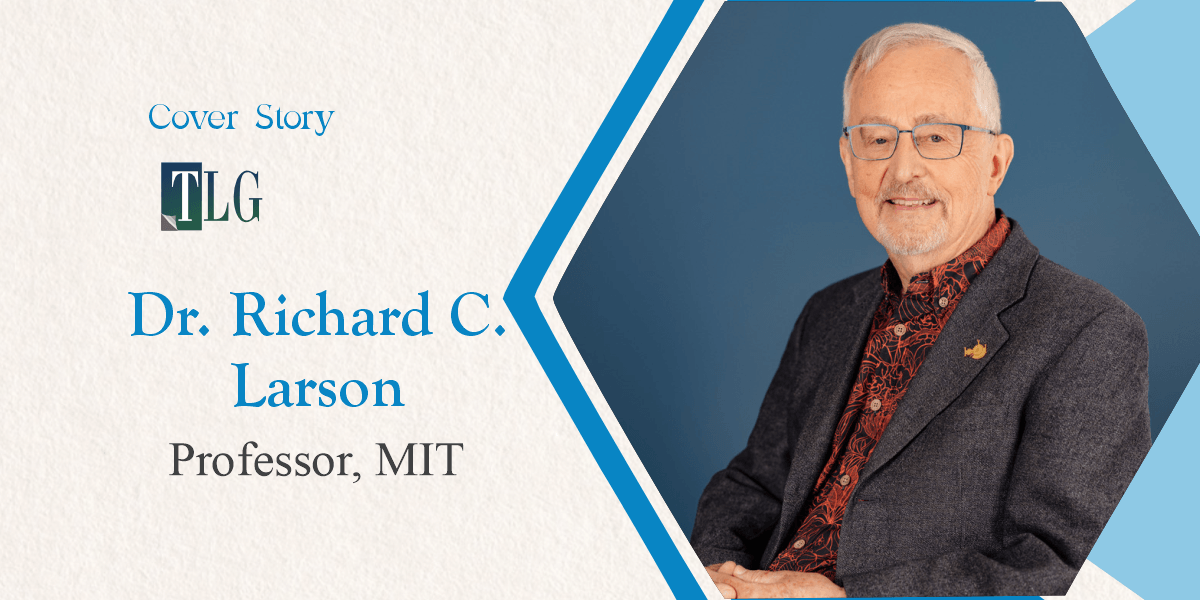
Dr. Richard Charles Larson, a distinguished MIT Professor, has spent over five decades transforming abstract mathematical theories into practical, life-saving systems and open-access educational frameworks. Globally recognized as “Doctor Queue” for his groundbreaking contributions to queueing theory and operations research, Larson engineered the Hypercube Queueing Model, a structural system that optimizes urban emergency response times for police, fire, and medical dispatch. As the visionary co-founder of MIT BLOSSOMS, he revolutionized international STEM education by delivering free, high-quality video repositories to underserved high schools worldwide. Today, his work bridges complex operational algorithms with daily human problem-solving through his profound literary initiative, MODEL THINKING For Everyday Life.
Introduction
Few individuals embody the spirit of lifelong learning as profoundly as Richard Larson. With an illustrious career spanning more than 50 years in research, academia, and open-source innovation, he has continually sought to push the boundaries of human knowledge while inspiring those around him to do the same. From pioneering breakthroughs in operations research to shaping modern approaches in international education and decision science, his contributions have left an indelible mark on both theoretical and applied disciplines.
Beyond his professional achievements, Richard’s journey is also a deeply personal narrative of partnership, dedication, and resilience. His career was intricately intertwined with the unwavering support of his late wife, Mary Elizabeth Murray (“Liz”), whose operational guidance and partnership played an integral role in their shared mission of expanding access to quality education. Whether presenting at international conferences, developing innovative digital learning models, or mentoring future researchers, Richard has remained fiercely committed to intellectual exploration and the betterment of society. Even in retirement, his passion for Model-Based Thinking and knowledge dissemination continues to drive his efforts, proving that the pursuit of learning is not a temporary phase, but a permanent way of life.
The Academic Foundations at MIT
Richard attributes much of his professional success to a fortunate beginning, being admitted to MIT as an undergraduate freshman at just 18 years old after graduating from Needham High School. His father initially hoped he would commute to campus to save on housing costs, but Larson’s academic experience took a highly collaborative turn when he joined the Phi Beta Epsilon (PBE) fraternity. Unlike most MIT fraternities located across the Charles River in Boston, PBE was situated directly on Memorial Drive on the Cambridge campus. This physical proximity provided him with a close-knit, intellectually stimulating community that became instrumental in his early academic and personal growth. He fondly recalls the camaraderie and support he received from fellow members, which made his rigorous undergraduate journey all the more enriching.
His passion for computational problem-solving deepened, leading him to pursue graduate studies at the same institution, ultimately earning his PhD in Operations Research. As he approached the completion of his doctoral dissertation, his faculty advisor, the revered Professor Alvin W. Drake, unexpectedly offered him an opportunity to stay on at MIT as an Assistant Professor.
Initially hesitant, Larson experienced what he calls the “Groucho Marx syndrome”, doubting whether he truly belonged in a faculty role alongside his former mentors so soon after being a student himself. However, he accepted the offer, gradually rising through the academic ranks to become a tenured professor. His decision to stay at MIT for the long term was driven by a deep intellectual curiosity and a love for the academic environment that had nurtured his analytical skills.
“Education is the most powerful form of innovation. Access to quality education shouldn’t depend on geography.”
– Dr. Richard C. Larson
The Fulfillment of Teaching and Mentoring
For Larson, the most gratifying aspect of his long academic career was engaging with students, both in the classroom and through intensive research mentorship. While formal lecturing was fulfilling, it was the deeper academic relationships formed through advising and supervising graduate students that he cherished the most. These close interactions fostered a culture of collaborative innovation and intellectual curiosity, often leading to groundbreaking research that was published in respected academic journals.
He took immense pride in witnessing his students push the boundaries of knowledge, make meaningful structural contributions to their fields, and go on to achieve remarkable success in their professional careers. Teaching, for him, was never just about imparting facts or formulas, it was about shaping minds, nurturing critical thinking, and fostering a sense of academic rigor paired with creative freedom. Seeing his students develop into international thought leaders and operational innovators brought him unparalleled fulfillment, consistently reaffirming his belief in the transformative power of education.
Solving Problems That Matter: “Doctor Queue”
Larson’s career is rooted in the fundamental belief that mathematics is a tool for human impact, not just conceptual insight. This philosophy earned him the widespread moniker “Doctor Queue” within the scientific community. His breakthrough research focused heavily on decoding queueing theory, the mathematical study of waiting lines. While waiting in lines is often viewed as a trivial daily frustration, Larson recognized that delays in logistical deployment could mean the difference between life and death.
His famed Hypercube Queueing Model became a critical operational framework used by police, fire, and medical systems to improve how emergency services deploy personnel and response vehicles in high-risk urban environments. By applying advanced spatial probability and multi-server queueing variables, the model optimized dispatcher decisions, drastically reducing response times and directly saving lives.
Additionally, his development of the Queue Inference Engine introduced innovative ways to analyze and predict service systems using only transactional data timestamps, heavily influencing research in modern operations management, banking systems, and decision science.
Global Education and the Democratization of Knowledge
Beyond urban emergency logistics, Larson’s greatest gift to the global community is his democratization of knowledge. As the co-founder of MIT BLOSSOMS (Blended Learning Open-Source Science Or Math Studies), he created one of the earliest and most expansive open-source STEM repositories for high school students. BLOSSOMS delivers free, world-class math and science video lessons designed to spark critical thinking, tailored specifically for students in underserved areas around the globe.
Through the Learning International Networks Consortium (LINC) and his leadership roles at MIT’s Center for Advanced Educational Services (CAES), Larson reshaped how digital distance learning is delivered. He recognized early on that access to quality education should not be dictated by geography or financial standing. By establishing blended learning models that empower local teachers across Africa, Asia, and Latin America, he helped cultivate sustainable educational infrastructures suited to diverse cultural and classroom needs.
Overcoming Challenges and Fostering Rigor
No successful career is without its professional hurdles, and Larson’s journey was no exception. One of the most humbling moments of his early academic career occurred when he was a graduate student working as a Teaching Assistant at MIT. In a large, crowded lecture hall, an undergraduate student asked for clarification on an equation Larson had just written across the blackboard. To his dismay, he realized that he could not adequately explain the underlying mechanics of the formula, an issue he attributes to his own lack of deep, structural understanding of the material at that specific moment.
From that day forward, he dedicated himself to meticulous, exhaustive preparation before every single lecture. He vowed to thoroughly understand every tangential variable of his subject matter, ensuring he could address any reasonable student question with clarity and confidence. This early stumbling block not only made him a legendary educator but also instilled in him a lifelong discipline of intellectual rigor. His experience serves as an enduring reminder to his peers that professional challenges, while sometimes uncomfortable, are instrumental in fostering true excellence.
Balancing Professional Responsibilities and Personal Life
Throughout his distinguished career, Richard Larson successfully balanced his demanding professional commitments with a vibrant, dedicated personal life. Before his retirement from active teaching, he held multiple exhausting roles, serving as a respected educator, a prolific researcher, an international institutional advisor, and most importantly, a devoted husband to his soulmate, Mary Elizabeth Murray (“Liz”). Their 43-year marriage was marked by unwavering mutual support, intellectual collaboration, and a shared commitment to public education. Together, their marriage was blessed with three children, who have since expanded the family with four grandchildren.
Liz played an integral role in Richard’s professional ecosystem, serving as an active participant in his global academic endeavors. She took on the leadership position of Project Manager for the MIT BLOSSOMS program, working directly alongside him to expand the reach of quality learning resources globally. Together, they traveled extensively, presenting BLOSSOMS to international ministries and educational communities.
One particularly memorable moment occurred in Saudi Arabia, where Liz confidently addressed a large, gender-segregated audience of hundreds of attendees, sharing their progressive vision for digital STEM access. Beyond their work at MIT, she also managed his operations consulting firm, ENFORTH Corp. (later Q.E.D.), ensuring his professional research goals were paired with sound business guidance. Her passing, about four years ago, left an immeasurable void in his life, yet her profound legacy endures through the millions of students they influenced together.
Innovation with a Conscience: Leadership and Accolades
Dr. Larson’s expansive career includes top-tier institutional leadership. He has served with distinction as the President of the Operations Research Society of America (ORSA) and the Institute for Operations Research and the Management Sciences (INFORMS). His visionary work in edtech and systems engineering eventually led to his election as a member of the prestigious National Academy of Engineering (NAE), one of the highest professional honors accorded to an engineer.
His accolades include the INFORMS President’s Award, the Kimball Medal, and professional listings within Marquis Who’s Who in America®. Even with these high-level validations, Larson’s primary focus has always remained anchored in ethical innovation, open-access knowledge sharing, public institution advising, and mentoring the next generation of operations research scientists.
Navigating Emerging Trends: The Rise of AI
Although retired from active classroom instruction, Larson continues to observe the rapid evolution of educational technology with great interest. In his view, the most transformative trend in modern society is the meteoric advancement of Artificial Intelligence (AI). He notes that AI is reshaping education, computational research, and industrial automation in unprecedented ways, bringing forth a unique dichotomy of exciting opportunities and severe systemic challenges.
One of his primary concerns centers around the growing reliance on AI-generated content in secondary and higher education. With students now able to complete complex assignments with minimal personal effort via generative AI tools, issues surrounding academic integrity, cognitive laziness, and genuine intellectual engagement have become deeply pressing.
He hopes that academic institutions and educators will address these complexities thoughtfully, creating guardrails that ensure AI serves as an active tool for enhancing critical thinking rather than a crutch that diminishes it. He maintains that while AI can process vast seas of data, it is human curiosity, empathy, and ethical decision-making that must ultimately guide the tool for the greater good.
Advice for Aspiring Researchers and Educators
When asked what guidance he would pass along to the next generation of scholars, Larson’s advice is both beautifully simple and profound: “Follow Your Learning Passions!” He has consistently encouraged his students to embrace radical intellectual curiosity and confidently venture into uncharted academic territories. He firmly believes that the most impactful, world-changing discoveries arise not from following safe, conventional paths, but from an insatiable, relentless desire to explore the unknown.
He points out that his own major breakthroughs, the Hypercube Queueing Model and the Queue Inference Engine, were not rigidly planned out at the start of his career. Instead, they emerged naturally from his deep, passionate engagement with complex real-world problems. He advises young researchers to approach their work with an open mind, seek knowledge far beyond the boundaries of standard textbooks, and actively apply theoretical math to real-world societal friction points.
Future Outlook
Although he is no longer conducting state-of-the-art laboratory research, Richard Larson’s mission is far from complete. His current focus has systematically shifted from elite university research to broad public education. He is deeply committed to promoting MODEL-Based Thinking to a wider mainstream audience, helping everyday individuals understand how conceptual and exemplary models can enhance their daily decision-making.
His book, MODEL THINKING For Everyday Life, serves as the modern cornerstone of this public mission. It offers accessible insights into how structured models can empower parents, managers, CEOs, and policymakers to cut through everyday cognitive complexity, minimize personal bias, and find logical clarity.
To expand this movement, Larson has taken his message to public multimedia platforms, including television broadcasts, radio interviews, and international speaking engagements. A memorable highlight of this public campaign occurred when he was featured on a massive 20-story digital billboard in the heart of Times Square, New York, courtesy of Marquis Who’s Who. For Richard Larson, as long as there are minds eager to learn, his lifelong work of education and inspiration is never truly finished.
FAQs
What is The Massachusetts Institute of Technology (MIT) known for?
The Massachusetts Institute of Technology (MIT) is a private research university in Cambridge, Massachusetts, United States. Founded in 1861 to advance “useful knowledge”, the university has played a significant role in the development of many areas of technology and science.
What is MIT BLOSSOMS best known for?
MIT BLOSSOMS is known for providing free, high-quality STEM educational video lessons and learning resources to students and teachers worldwide, especially in underserved schools. Co-founded by Richard Charles Larson, the initiative focuses on making interactive science and mathematics education accessible through engaging, classroom-friendly content.
Who is Richard Charles Larson?
Dr. Richard Charles Larson, a renowned MIT Professor known as “Doctor Queue,” transformed queueing theory into real-world systems that improve emergency response operations. As co-founder of MIT BLOSSOMS, he also expanded access to free STEM education globally through innovative video-based learning platforms.
What is Richard Larson’s famous “Hypercube Queueing Model”?
The Hypercube Queueing Model is a mathematical framework developed by Dr. Larson that applies spatial probability and operations research to urban service systems. It helps cities optimize the deployment, positioning, and dispatching of emergency response vehicles (like police cars, ambulances, and fire trucks), drastically reducing arrival times and saving lives in dense urban environments.
What is the primary objective of the MIT BLOSSOMS program?
Co-founded by Dr. Larson, MIT BLOSSOMS (Blended Learning Open-Source Science Or Math Studies) is an open-source online repository that provides free, high-quality math and science video lessons for high school classrooms globally. It is designed to foster critical thinking and problem-solving skills, particularly for students in underserved and developing regions.
What is “Model-Based Thinking” according to Dr. Larson’s recent work?
As detailed in his book MODEL THINKING For Everyday Life, it is the practice of utilizing structured, conceptual models and logical reasoning to make better decisions in daily life. Dr. Larson argues that the same structured analysis used to solve complex engineering problems can help individuals navigate personal, professional, and financial choices with greater clarity.
Why is Dr. Richard Larson widely referred to as “Doctor Queue”?
He earned the nickname “Doctor Queue” due to his pioneering research in queueing theory—the mathematical study of waiting lines. His work revolutionized how public and private sectors analyze, predict, and manage waiting times in logistical, digital, and consumer systems.
“Stay open to new ideas. Bring your life experience into your work. Innovation grows at the intersection of intellect and empathy.”
– Dr. Richard C. Larson
Key Takeaways
- True innovation relies on anchoring complex mathematical theories into applied solutions that directly solve human problems and optimize life-saving public infrastructure.
- Quality STEM education must transcend geographic and socioeconomic barriers, utilizing open-source digital tools to empower underserved communities globally.
- Operational excellence and effective teaching stem from meticulous preparation and an ongoing willingness to confront and learn from professional shortcomings.
- Learning is an active, lifelong habit that does not cease at retirement; continuous curiosity keeps the human mind sharp, innovative, and purposeful across decades.
- Meaningful systemic innovation occurs at the precise intersection of mathematical intellect and human empathy.
Conclusion
Dr. Richard Charles Larson’s journey stands as a towering testament to the profound impact a single dedicated educator and scientist can have on the world. Through his pioneering work in operations research, he transformed the abstract beauty of mathematics into practical, life-saving systems that secure urban communities. Through his visionary development of open-source platforms like MIT BLOSSOMS, he successfully tore down geographic barriers to deliver world-class STEM education to millions of students across the globe.
Supported by a beautiful lifelong partnership with his late wife, Liz, Larson has masterfully shown that academic rigor is at its best when paired with deep human empathy. As he transitions his focus toward equipping the general public with the cognitive tools of Model-Based Thinking, he continues to prove that education is an unending, transformative force. His legacy reminds us that true intellectual leadership is not measured by the exclusivity of the knowledge one possesses, but by the generosity with which it is shared with the rest of humanity.
 Magazine