


 admin
admin 
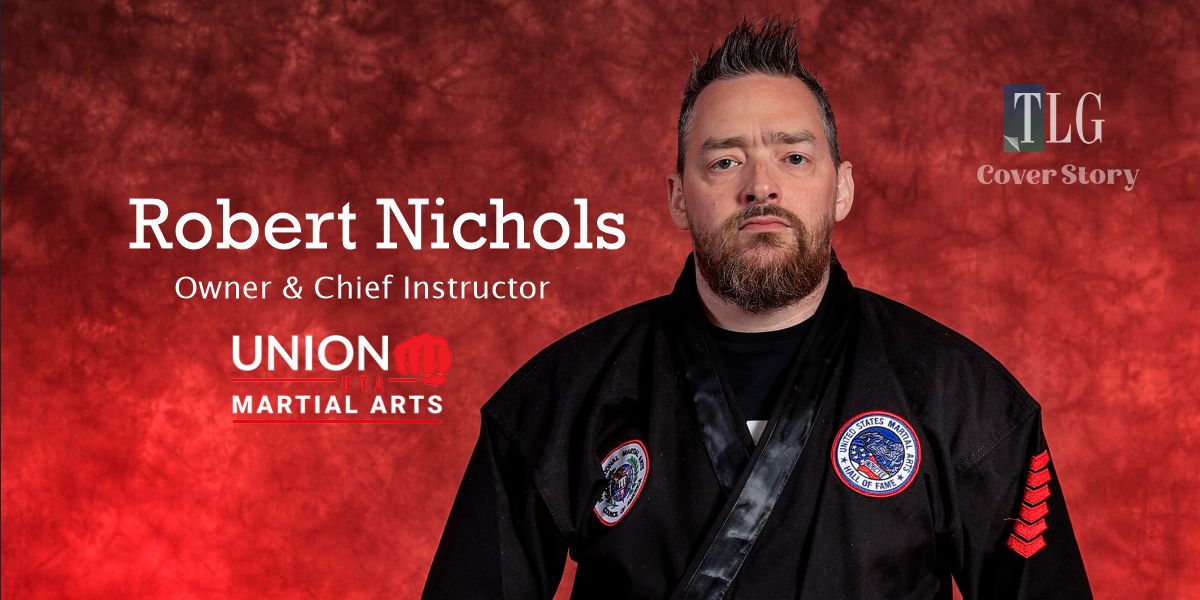
Leadership stories are often told as smooth, upward trajectories, carefully planned, strategically executed, and neatly packaged. Robert Nichols’ journey, however, resists that narrative. It unfolds instead as a series of defining chapters, each shaped by uncertainty, responsibility, personal trials, and moments that demanded resilience over perfection. What emerges is not just the story of a martial arts instructor or entrepreneur, but of a leader forged in real-world challenges, where growth came not from certainty, but from showing up when it mattered most.
His journey reflects the realities of modern leadership, where adaptability, emotional intelligence, and consistency outweigh rigid strategies. It also highlights a deeper truth: meaningful leadership is not built in moments of comfort, but in the ability to navigate chaos while continuing to create impact.
“Leadership isn’t about having everything figured out; it’s about showing up consistently, especially when it’s hard.”
– Robert Nichols
A Beginning Without a Blueprint
Nichols’ early leadership journey was anything but conventional. There was no structured transition, no comprehensive training, and certainly no safety net. The responsibility of running a martial arts school came abruptly, without a detailed roadmap.
On only his second day stepping into a leadership role, a brief exchange with his instructor marked the beginning of what would become a defining phase. With little more than a set of keys and a simple “good luck,” the responsibility was handed over. From that moment forward, every decision, teaching classes, managing operations, handling finances, marketing, and maintaining the facility, rested entirely on his shoulders.
The early years were, by his own reflection, a “trial by fire.” Mistakes were inevitable, but they became the foundation of learning. Rather than seeking perfection, Nichols focused on ownership, understanding that leadership was less about having all the answers and more about the willingness to find them and take responsibility for the outcomes.
From Instruction to Impact
As time progressed, the nature of his role began to evolve. In his mid-20s, a shift occurred, not in responsibilities, but in perspective. Teaching martial arts was no longer limited to physical techniques. The realization dawned that students, children, teenagers, and adults alike, were looking for guidance beyond the mat.
This awareness transformed his approach. Leadership became intentional. Communication, mentorship, and personal development took center stage. The school was no longer just a place for training; it became an environment that shaped character, discipline, and resilience.
This transition marked a critical turning point. The focus expanded from running a business to building a space that could influence lives in meaningful and lasting ways.
When Leadership Becomes Personal
Leadership took on a deeper dimension when it intersected with family. Nichols’ daughter began training at the school, eventually becoming part of its daily operations. What initially seemed like a temporary involvement evolved into a profound shared journey.
Watching his daughter grow within the same environment he had built brought a new level of accountability. Leadership was no longer something that could be performed; it had to be lived consistently. Every action, decision, and interaction became a real-time example.
This chapter reinforced a powerful truth: leadership is most authentic when it is observed up close. It cannot be manufactured or imitated; it must be demonstrated daily.
The Defining Storm: Navigating Crisis
The global COVID-19 pandemic presented one of the most significant challenges in Nichols’ journey. Like many businesses, the martial arts school faced immediate disruption. A substantial portion of its student base was lost almost overnight, and the stability that had taken years to build was suddenly at risk.
Rather than retreating, Nichols and his team adapted. Tuition fees were reduced to support families facing financial uncertainty. Classes transitioned online, with an intensive schedule of virtual sessions conducted from home. For months, consistency became the anchor, offering not just training, but a sense of normalcy.
Equally important was the human connection. Regular conversations with parents were not focused on retention or revenue, but on understanding their challenges and offering support. The approach was clear: the priority was people, not transactions.
This period redefined leadership. It demonstrated that in times of crisis, individuals and communities look for stability, empathy, and reliability. The experience reinforced a lasting belief, organizations that endure are those that prioritize relationships over short-term outcomes.
Adapting to a Changing World
In the years following the pandemic, new challenges emerged. Attention spans shortened, distractions multiplied, and maintaining commitment became increasingly difficult.
Nichols responded by evolving his teaching philosophy. The focus shifted toward developing resilience, improving communication, and helping individuals maintain consistency in an increasingly fragmented world. Training programs were adapted to align with how people learn and engage today, rather than relying solely on traditional methods.
This willingness to reassess and adapt reflects a broader leadership principle: relevance requires evolution. Clinging to outdated approaches, even if once effective, limits growth in a rapidly changing environment.
The Invisible Battles of Leadership
Not all challenges are visible. As Nichols progressed further into his career, a different kind of test emerged, one defined by personal struggles, health concerns, and the pressures that come with sustained responsibility.
Leading at 23 and leading at 48, as he observed, are fundamentally different experiences. Life circumstances shift, and the weight of leadership becomes more complex. Despite these challenges, the expectation to remain steady for others does not diminish.
This phase brought a deeper understanding of leadership. It is not about projecting perfection, but about consistency and honesty. It involves showing up even when circumstances are difficult, and recognizing that vulnerability is not a weakness, but a component of authenticity.
The Culture That Drives Success
At the heart of Nichols’ organization lies a defining principle: culture is the true differentiator. While many martial arts schools may appear similar in structure, the distinction lies in intention and execution.
Every class is designed with purpose, aimed not just at teaching techniques, but at building confidence, discipline, and the ability to navigate pressure. This approach transforms training into a holistic developmental experience.
Equally significant is the emphasis on community. Relationships extend beyond the training floor, encompassing families and individual circumstances. This depth of connection fosters trust, loyalty, and long-term engagement.
Another key element is adaptability. Rather than adhering rigidly to tradition, the organization continuously evaluates its methods to ensure they remain effective and relevant. This balance between honoring foundational principles and embracing innovation sustains growth.
Leadership Through Empowerment
Nichols places strong emphasis on building and trusting a capable team. Recognizing that no individual can excel in every aspect, he focuses on empowering others to contribute their strengths.
Responsibility is shared, decisions are collaborative, and the team plays an active role in shaping the organization’s direction. This approach not only enhances operational efficiency but also fosters ownership and commitment among team members.
Leadership, in this context, becomes less about control and more about enabling others to succeed.
Redefining Success
Over time, Nichols’ definition of success has evolved significantly. Early in his journey, success may have been associated with growth, recognition, or achievement. Today, it is defined by impact.
There is a clear distinction between making an impression and making a difference. True success lies in the ability to influence lives positively, to help individuals develop resilience, and to create an environment where people can grow.
This perspective aligns with his broader philosophy, success is not a singular achievement, but a continuous process of effort, adaptation, and improvement.
Challenging Industry Norms
Nichols has also taken a deliberate approach to challenging certain traditional norms within the martial arts industry. One such example is the use of hierarchical titles. Instead of emphasizing formal designations, he advocates for forms of respect that are applicable beyond the training environment.
This reflects a broader commitment to practicality and relevance—ensuring that lessons learned within the school translate effectively into everyday life.
Looking Ahead: Vision and Expansion
The future vision for the organization involves growth, not just in scale but in opportunity. Plans include expanding to multiple locations, creating sustainable career paths for team members, and extending influence beyond a single facility.
Nichols also aims to contribute to the broader industry by supporting smaller schools. Recognizing a gap in business education for martial arts instructors, he intends to share insights and provide guidance to help others succeed.
This forward-looking approach reflects a commitment to both individual and collective advancement.
“Success is not a one-time event. It’s built through continuous effort, adaptation, and the willingness to keep moving forward.”
– Robert Nichols
A Legacy Defined by Purpose
If Nichols’ legacy were to be defined by a single idea, it would center on meaningful impact. Leadership, in his view, transcends industry boundaries. Whether in business, family, or community, the principles remain consistent, ownership, authenticity, adaptability, and genuine connection.
There is no singular formula for leadership. It is built through experience, shaped by challenges, and sustained by the willingness to continue, even in uncertainty.
 Magazine