


 admin
admin 
Shifting from Short-Term Profit to Long-Term Corporate Flexibility in a Volatile Global Market
Quick Summary
The global business ecosystem is undergoing a massive transformation driven by rapid technological progress and changing economic priorities. Visionary chief executives are moving away from traditional, short-term management styles to focus on deep, long-term organizational reinvention.
Success in this new era requires balancing artificial intelligence integration with human-centered workplace strategies. Leaders who build flexible operations and prioritize clear, transparent communication are pulling ahead of their competitors. Ultimately, corporate value is being redefined by sustainability, digital trust, and the ability to adapt to constant market shifts.
Introduction
The global economy is reorganizing itself in real time. Volatility is no longer an occasional disruption; it is the daily baseline for doing business. Executives face a tough balancing act, managing immediate economic pressures while completely rebuilding their organizations for the future.
According to PwC’s latest global data, nearly 42% of chief executives believe their companies will not survive the next decade on their current paths. The traditional playbook of making small, cautious changes is officially obsolete. The modern chief executive must be a strategist, a tech specialist, and a deeply empathetic human manager all at once. Competitive advantage now belongs to those who can reinvent their business models while capital, technology, and talent are being shaken up across the world.
Industry Context
A massive wave of infrastructure investment is shifting global centers of economic gravity. New energy systems, digital corridors, and advanced data centers are popping up at a historic pace. More than half of global business leaders plan to make major international investments this year, with significant capital flowing toward emerging hubs in India and the Middle East.
At the same time, technology and geopolitics are becoming inseparable. Nations are forming distinct digital ecosystems, forcing multinational brands to navigate strict regional rules around data sovereignty and cybersecurity. In fact, modern leaders rank cyber risks right alongside macroeconomic instability as their top near-term threat. Success requires working hand-in-hand with governments to keep digital tools secure and connected across borders.
Key Trends
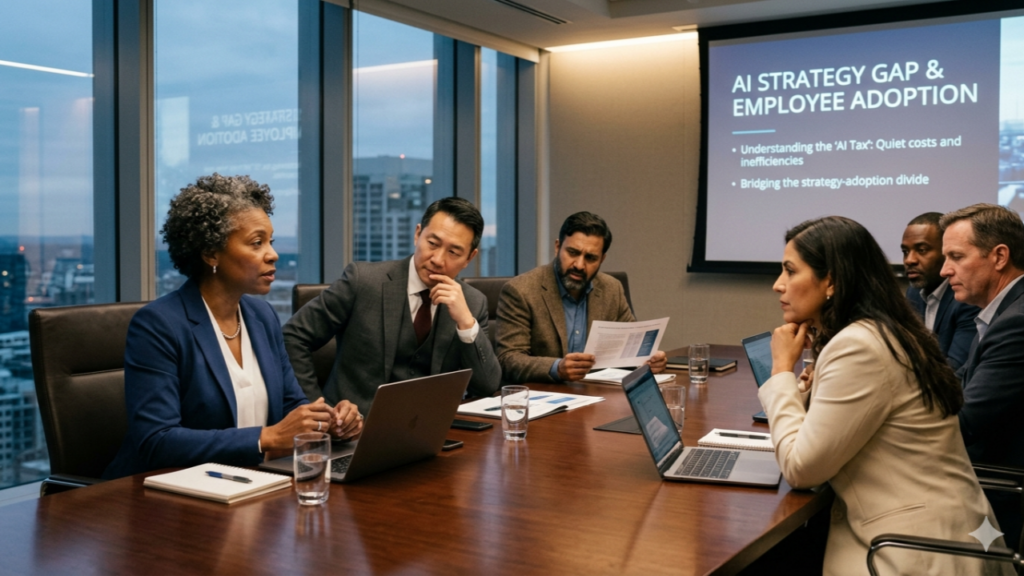
- Heavy infrastructure investments contrast with cautious adoption: While global corporations are spending significantly on artificial intelligence systems, the actual workplace usage rate is moving at a much slower pace.
- Daily generative AI use remains remarkably low: Recent workforce surveys reveal that only 14% of employees currently use generative AI tools during their daily job routines.
- Most businesses are stuck in early testing phases: A large majority of organizations remain trapped in the beginning stages of tech integration, waiting to see clear proof of concept.
- An elite group of frontrunners is pulling ahead: Roughly 30% of business executives are already reporting direct, measurable revenue growth from their initial AI deployments.
- The focus is shifting from cutting costs to customer service: Leading companies are moving past small pilot projects to embed machine learning into core decision-making systems, aiming to create entirely new ways to serve customers.
Leadership Insights
As automation handles routine tasks, human roles are changing fast. Experts predict that AI could add up to 15% to global gross domestic product (GDP) over the next decade by creating entirely new industries and career paths. Employees who use these tools daily report clear boosts in productivity, along with increased confidence in their job security.
The big challenge for leadership is closing the skills gap. Core job requirements in tech-heavy fields are changing 66% faster than in traditional sectors. The most successful organizations are designing a workplace where humans and AI co-create, blending human creativity with digital speed.
Expert Perspective
True innovation in 2026 requires looking far beyond the next quarterly earnings report. Executives must anticipate customer needs years in advance and build flexible corporate systems that can pivot before a crisis hits.
- Tech Integration: Focuses on predictive analytics, automation, and cloud security to deliver faster product launches and lower operational costs.
- Human-Centered Management: Centers on flexible schedules, active upskilling, and mental health support to drive higher employee retention and attract top talent.
- Sustainability: Prioritizes ethical supply chains and carbon reduction tracking to build deep consumer brand loyalty and attract serious investor interest.
Future Outlook
The best executives are shifting from top-down control to open, transparent communication. Modern consumers and employees can spot performative corporate statements instantly. Authenticity has become a valuable currency, and clear communication during periods of uncertainty builds lasting institutional trust.
Furthermore, data-driven decision-making is balancing out old-school executive intuition. Leaders are using advanced data streams to track operational efficiency and changing consumer habits, ensuring that major corporate pivots are backed by hard facts rather than guesswork.
Real-World Success Stories
Practical examples show exactly how this new philosophy translates into market success:
- Retail Reinvention (Walmart & Zara): Global retail leaders like Walmart and Zara integrated predictive AI into their supply chain and e-commerce platforms to manage regional stock levels and personalize shopping feeds. This predictive inventory tracking cut retail stockout errors significantly, lowered overhead costs, and sharply increased customer retention.
- Green Manufacturing (Nestlé): Industrial consumer goods giant Nestlé redesigned its product lines by transitioning to standardized, reusable mono-material packaging and expanding renewable energy use across factories. Despite facing higher initial setup costs, the strategic move successfully attracted green investment capital and built deep consumer brand loyalty.
- Culture Overhaul (Asana): Modern digital platforms, including workplace productivity firm Asana, addressed high tech-sector employee turnover by introducing flexible working hours, mental health stipends, and continuous learning budgets. Within twelve months of focusing on internal culture, employee retention jumped and corporate hiring costs dropped significantly.
Crucial Pitfalls to Avoid
Even experienced executives can stumble in this fast-paced market. Staying ahead means avoiding these common traps:
“The greatest danger in times of turbulence is not the turbulence; it is to act with yesterday’s logic.” – Peter Drucker
- Ignoring Tech Evolution: Staying tied to legacy systems out of comfort guarantees a loss of market relevance.
- Chasing Short-Term Profit: Cutting research and development budgets to boost immediate margins harms long-term survival.
- Corporate Silence: Failing to communicate transparently during organizational shifts creates internal panic and reduces team productivity.
The Next Generation of Leaders
The preparation for future executive roles is shifting. Tomorrow’s leaders need deep digital literacy to manage complex data systems and guard against cyber threats. However, technical skills alone are no longer enough. Emotional intelligence, empathy, and a global mindset are now essential requirements for keeping cross-border teams motivated and aligned.
FAQs
What makes visionary leaders different from traditional executives in 2026?
Traditional executives focus primarily on short-term quarterly profits and maintaining existing operations. Modern visionary leaders prioritize long-term corporate agility, continuous business model transformation, ethical technology integration, and healthy workplace cultures.
Why is human-centered management considered a core innovation strategy?
With rapid technological disruptions, employee burnout and skill gaps are major risks. Companies that protect their workforce through flexible schedules, continuous upskilling, and mental health support achieve significantly higher operational productivity and lower turnover.
How are top chief executives moving past the initial artificial intelligence hype?
Instead of running isolated tech pilots or using AI purely to cut headcount, advanced leaders are embedding machine learning directly into core decision-making systems to create new products, optimize supply chains, and improve consumer experiences.
How do geopolitical alignments affect corporate digital strategy today?
Nations are increasingly forming distinct digital ecosystems with unique rules regarding data sovereignty and cybersecurity. This forces international business leaders to build adaptable digital frameworks that can comply with varying regional regulations safely.
Can smaller enterprises successfully apply these massive leadership trends?
Yes. Small business owners can adopt affordable digital analytics tools, pivot their services based on direct customer feedback, and build transparent, localized brand communities to successfully compete against much larger corporations.
Key Takeaways
- Reinvention is Mandatory: Organizations must continuously update their business models to survive constant market shifts.
- Bridge the AI Adoption Gap: True value comes from shifting AI from small, isolated experiments to deep, company-wide integration.
- Prioritize Human Talent: High-performing businesses rely on continuous employee upskilling and supportive workplace cultures.
- Balance Tech with Ethics: Successful tech deployment requires strict attention to data privacy and corporate transparency.
Conclusion
Business models are no longer judged solely by financial returns. Investors, workers, and customers now evaluate brands based on their social impact, internal workplace health, and long-term vision. The chief executives leading the market do not just react to future trends; they actively shape them. Success in the coming decade will depend on a leader’s willingness to keep learning, stay resilient, and embrace change before it becomes unavoidable.
 Magazine