


 admin
admin 
SpaceX Starship Reaches Orbit during Historic 14th Test Flight and Deploys Satellites
Quick Summary
SpaceX Starship achieved its first successful orbital flight during its 14th test mission, marking a major milestone for the company’s ambitious reusable rocket program. The spacecraft reached orbit despite an early failure involving one of its three main engines after separating from the Super Heavy booster. Engineers quickly assessed the situation and confirmed that Starship could continue its orbital attempt using its remaining engines.
The spacecraft then deployed 26 next-generation Starlink satellites at an altitude of roughly 269 kilometres before beginning its controlled return. Although SpaceX shortened the mission from the planned 10 hours to approximately three hours, the flight still demonstrated significant progress toward commercial Starship operations.
Introduction
The SpaceX Starship orbital debut delivered a major breakthrough after years of testing, setbacks, and technical development surrounding the next-generation spacecraft. During its 14th test flight, Starship successfully reached orbit for the first time and deployed 26 Starlink satellites, giving the mission both technical and commercial importance. However, one of the spacecraft’s three main engines shut down prematurely after separation from the Super Heavy booster, forcing engineers to reassess the planned flight profile.
Despite that setback, the team confirmed that Starship could continue toward orbit with its remaining engines, allowing the spacecraft to complete one of its most important objectives. The successful orbital flight now gives SpaceX valuable operational data for future satellite launches, lunar missions, and repeated Starship flights.
Starship Reaches Orbit Despite Engine Failure
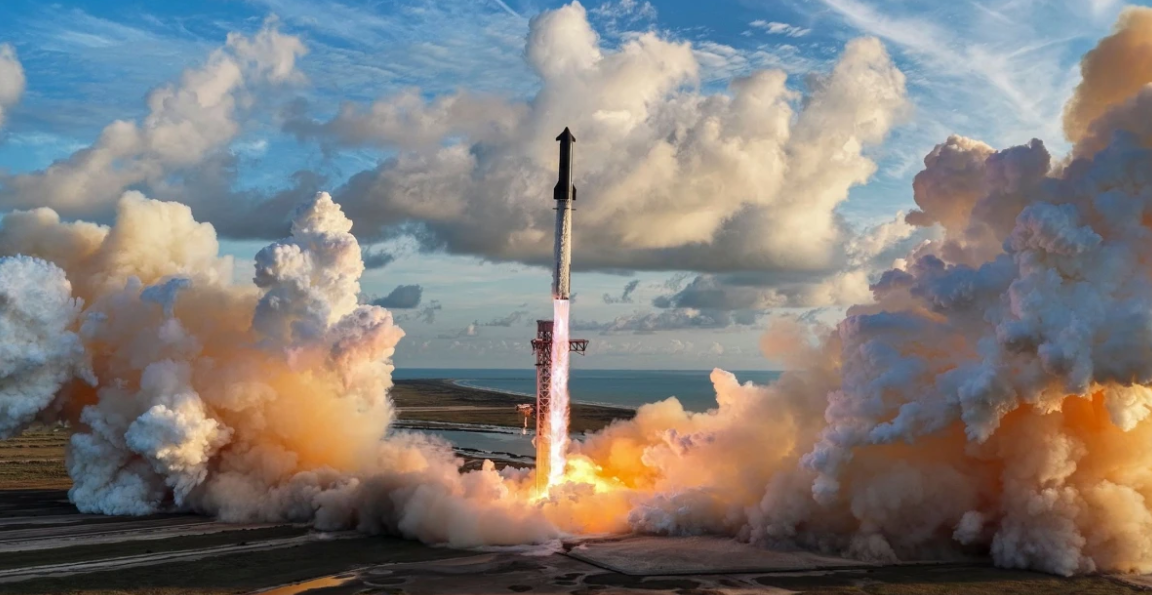
The Starship orbital debut began with the 40-storey vehicle launching from SpaceX’s Starbase facility near Brownsville, Texas, before the Super Heavy booster separated from the upper-stage spacecraft. The booster then attempted its controlled descent toward the Gulf of Mexico, although several engines stopped working during the return sequence.
After separation, one of Starship’s three main engines also shut down earlier than expected, initially creating uncertainty about whether the spacecraft could achieve orbit. Engineers quickly evaluated the spacecraft’s remaining capabilities and approved another orbital attempt, which Starship successfully completed minutes later.
26 Starlink Satellites Mark Commercial Milestone
After reaching orbit, Starship deployed 26 next-generation Starlink satellites individually at an altitude of approximately 269 kilometres, marking the spacecraft’s first orbital satellite deployment. The satellites represent an important step because Starship aims to carry significantly larger payloads than SpaceX’s existing Falcon 9 launches.
The new V3 Starlink satellites can reportedly handle around ten times more data than earlier V2 mini satellites. Therefore, successful Starship operations could help SpaceX expand its satellite network faster while reducing dependence on smaller launch batches.
What Starship’s Orbital Success Means
The successful SpaceX Starship orbital debut represents an important step toward the company’s plans for frequent reusable spacecraft operations. All 13 previous Starship test flights since 2023 had remained in suborbital space, making orbital achievement a long-awaited development milestone.
SpaceX also plans to use Starship for larger Starlink deployments and future NASA missions targeting the Moon. The company ultimately wants Starship to support hundreds or even thousands of flights each year, although repeated engine problems remain an important technical challenge.
FAQs
1. What was achieved during the SpaceX Starship orbital debut?
The SpaceX Starship orbital debut successfully placed the spacecraft into orbit for the first time and enabled it to deploy 26 next-generation Starlink satellites.
2. Why did SpaceX shorten the Starship mission?
SpaceX shortened the mission after one of Starship’s three main engines shut down prematurely following separation from the Super Heavy booster.
3. How many Starlink satellites did Starship deploy?
Starship successfully deployed 26 next-generation Starlink satellites at an altitude of approximately 269 kilometres during its first orbital deployment.
4. Why is Starship reaching orbit important for SpaceX?
Reaching orbit provides crucial progress toward routine satellite launches, larger Starlink deployments, reusable operations, and future lunar missions.
5. What happened when Starship returned to Earth?
Starship completed a controlled Pacific descent before touching the ocean, tipping onto its side, and becoming engulfed by flames.
Key Takeaways
- Orbital milestone: Starship reached orbit successfully for the first time during its 14th test flight after years of development and testing.
- Satellite deployment: The spacecraft deployed 26 next-generation Starlink satellites, marking its first operational orbital payload deployment.
- Engine challenge: One main engine failed during ascent, yet engineers adjusted the mission and successfully continued toward orbit.
- Commercial potential: Starship could support larger Starlink satellite batches and faster constellation expansion after entering routine operations.
- Future missions: The spacecraft remains central to SpaceX’s plans for reusable launches, expanded satellite services, and future lunar missions.
Conclusion
The SpaceX Starship orbital debut marks a significant achievement for the company’s next-generation launch program, despite the engine failure that forced an earlier mission ending. Starship successfully reached orbit and deployed 26 Starlink satellites, proving that the spacecraft can perform critical orbital operations with a commercial payload.
The mission also provided valuable engineering data that could guide future improvements across propulsion and spacecraft systems. SpaceX now faces the challenge of turning this important test success into reliable and repeatable Starship operations. With future Starlink launches and lunar missions planned, this orbital milestone could shape the next phase of SpaceX’s ambitious spacecraft program.
 Magazine