


 admin
admin 
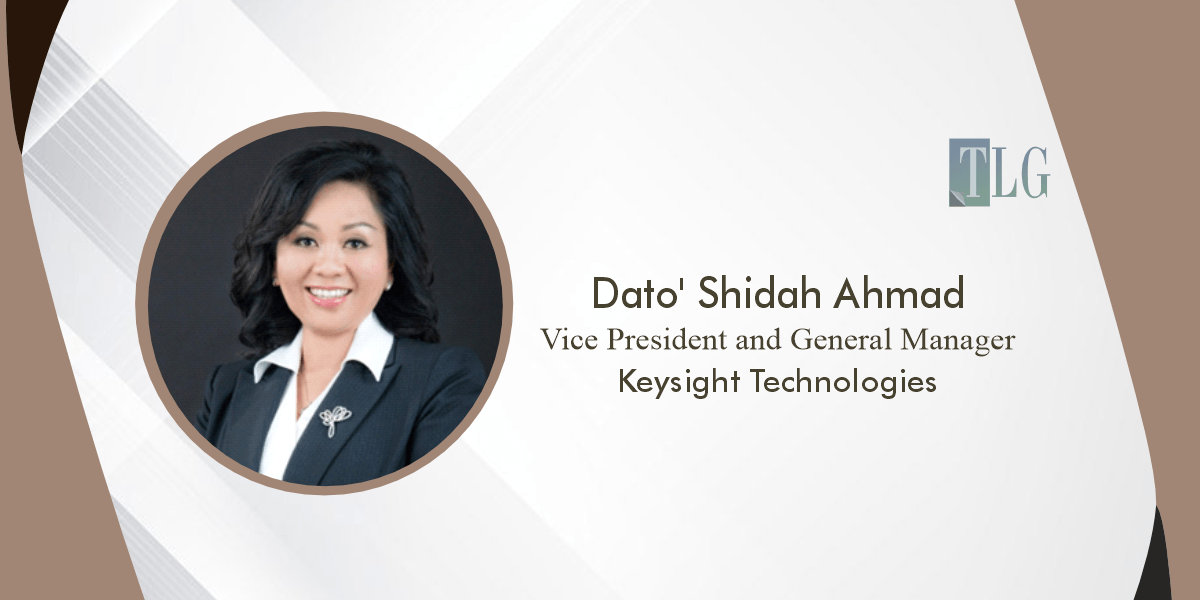
Keysight Technologies stands at the forefront of electronic design and test solutions, enabling innovation across communications, aerospace, automotive, and semiconductor industries. At the heart of its global supply chain and manufacturing excellence is Dato’ Shidah Ahmad, Vice President and General Manager, Global Order Fulfilment and Supply Chain. An engineer by training and a strategic leader by experience, she has become a powerful advocate for diversity in STEM and a key driver of operational excellence across continents.
In an era defined by digital acceleration and technological disruption, leadership demands more than operational expertise. It requires vision, adaptability, and a deep commitment to nurturing talent capable of navigating complexity. Dato’ Shidah Ahmad’s career reflects this multidimensional leadership approach, one that integrates strategic execution with inclusive growth. Her work not only strengthens corporate performance but also contributes to shaping a more equitable and competitive technology ecosystem across Asia and beyond.
“Diversity in STEM is not simply about representation; it is about unlocking untapped potential that strengthens innovation and global competitiveness.”
– Dato’ Shidah Ahmad
Engineering Roots and Global Vision
Dato’ Shidah Ahmad’s journey reflects the evolution of modern technology leadership. Armed with an engineering background and an MBA from Ohio University, she combines analytical rigor with strategic foresight. Based in Penang, she holds full accountability for Keysight’s worldwide supply chain, advanced manufacturing centers, global trade compliance, and logistics operations spanning Asia, Europe, and the United States.
Her role extends beyond operational oversight. It involves navigating complex technology ecosystems, ensuring precision in manufacturing high-value instruments, and aligning global teams toward shared performance goals. In an industry defined by rapid innovation cycles and first-to-market pressure, her leadership ensures that execution matches ambition.
Navigating Digital Transformation
Digital transformation continues to redefine industries at unprecedented speed. Design cycles grow shorter, technologies converge, and global competition intensifies. Under such circumstances, supply chain resilience and agility become strategic imperatives.
Dato’ Shidah Ahmad has emphasized that technology companies must innovate while remaining cost-efficient and productive. This requires more than systems and automation; it demands highly skilled talent capable of managing complexity. STEM expertise, particularly in science, technology, engineering, and mathematics, forms the backbone of sustainable competitiveness.
Global forecasts reinforce this urgency. The World Economic Forum projects that 65% of children entering primary school today will eventually work in roles that do not yet exist, largely rooted in STEM fields. In Southeast Asia, nearly 80% of jobs are expected to require digital literacy and applied ICT skills by 2030. These projections underscore the pressing need to cultivate inclusive and future-ready talent pipelines.
Confronting Gender Disparity in STEM
Despite growing demand, STEM fields remain disproportionately male-dominated. Globally, women represent only about a quarter of the STEM workforce. Across Asia-Pacific, female participation in research positions often ranges between 18% and 23%. Even in advanced economies such as Singapore, women account for only around 30% of STEM researchers.
The disparity does not reflect capability. International assessments consistently show that girls perform as well as, or better than, boys in science subjects. However, systemic barriers, limited representation in leadership roles, and wage gaps continue to restrict progress.
Dato’ Shidah Ahmad has argued that failing to harness the full potential of women in STEM is not merely a social issue but a competitive disadvantage. Economies striving for technological leadership cannot afford to sideline half their talent pool.
Corporate Responsibility and Early Intervention
Closing the gender gap requires action from both governments and corporations. Within Keysight Technologies, diversity and inclusion are embedded in the company’s culture, a legacy tracing back to its origins from Hewlett-Packard.
Initiatives such as “Introduce a Girl to Engineering Day (IGED)” and “Keysight After School” science workshops aim to spark early interest in engineering among young girls. These programs provide hands-on exposure to real technologies and practicing engineers, transforming abstract subjects into tangible possibilities.
The philosophy behind these efforts is straightforward: early exposure builds confidence, sustained engagement nurtures competence, and visible role models inspire ambition. By investing from elementary through tertiary levels, the organization seeks to create a robust pipeline of female engineering talent.
Diversity as a Competitive Advantage
For Dato’ Shidah Ahmad, diversity extends beyond fairness; it is a business strategy. Diverse teams mirror diverse markets. As customer demographics broaden and technological demands grow sophisticated, organizations require varied perspectives to solve complex challenges.
Research consistently links gender-diverse leadership teams to stronger financial performance and more effective decision-making. Studies show that diverse teams make better decisions up to 87% of the time and often reach conclusions faster with fewer meetings.
Within Keysight’s 13,000-strong global workforce across 150 locations, approximately 31% of employees are women, with 23% occupying global leadership roles. Notably, within the global supply chain and manufacturing operations led by Dato’ Shidah Ahmad, half of the senior staff members are women. These leaders manage high-complexity manufacturing operations, spanning firmware, hardware, materials science, process engineering, quality assurance, procurement, and marketing.
“When organizations reflect the diversity of their markets, they are better equipped to create solutions that address real-world complexity.”
– Dato’ Shidah Ahmad
Leadership Style and Impact
Dato’ Shidah Ahmad’s leadership style blends technical depth with inclusive management. By fostering cross-functional collaboration and empowering diverse teams, she strengthens operational resilience and innovation capability.
Her influence extends beyond corporate boundaries. She has consistently spoken about the importance of dismantling structural barriers that hinder women in STEM, encouraging corporations to take a proactive stance in mentorship, sponsorship, and career development.
In a world where technological advancement shapes economic trajectories, leaders like Dato’ Shidah Ahmad demonstrate that inclusion is not peripheral; it is central to sustainable growth.
Legacy in Motion
The electronics and engineering sectors continue to evolve rapidly, driven by digital transformation, 5G, artificial intelligence, and smart manufacturing. As these technologies redefine industries, the call for inclusive talent strategies grows louder.
Dato’ Shidah Ahmad’s work illustrates how operational excellence and social responsibility can intersect. By aligning supply chain leadership with diversity advocacy, she reinforces a simple yet powerful truth: innovation flourishes where diverse minds collaborate.
 Magazine