


 admin
admin “Healthcare innovation deserves marketing that is as rigorous as the science behind it. That is the standard Bichsel Medical Marketing Group holds ourselves to.”
– Lauren Dustman
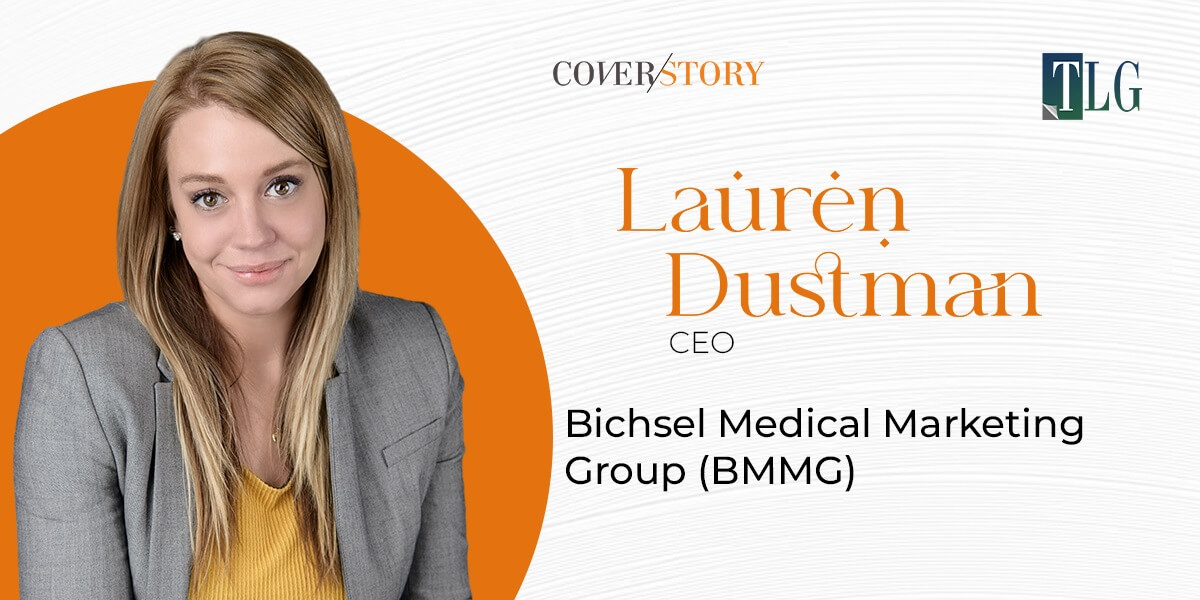
In an era dominated by clicks, impressions, and automated campaigns, Lauren Dustman is redefining success in healthcare marketing. With over twelve years in the MedTech industry, she has learned that healthcare marketing is not a race for attention; it is a test of credibility. At the helm of Bichsel Medical Marketing Group (BMMG), Dustman is shaping a future where adoption and trust are valued above metrics and noise, ensuring innovations reach the clinicians and patients who need them most. Her vision blends strategic rigor with human connection, creating a marketing approach that thrives even in highly regulated and scrutinized environments.
Drawing on her extensive experience, she emphasizes that real impact comes from intentional strategy rather than superficial activity. For Dustman, healthcare marketing must align with clinical realities, regulatory frameworks, and the nuanced decision-making processes of healthcare professionals. In her view, every campaign must not only capture attention but also earn trust and foster lasting adoption, creating measurable outcomes that benefit both the market and patient care.
How Healthcare Marketing Became a Test of Credibility
Healthcare marketing has always been inherently complex, requiring careful navigation of scientific accuracy, regulatory compliance, and audience needs. Dustman’s philosophy of trust-driven marketing developed over years of observing these intricacies firsthand. She witnessed the industry cycle through phases of rapid acceleration, overcorrection, and strategic recalibration, each leaving its mark on her leadership approach. The lessons she gleaned emphasized patience, discipline, and evidence-based decision-making as the pillars of effective marketing.
“Early in my career, I thought momentum came from doing more,” Dustman recalls. “Experience taught me that in healthcare, progress comes from doing the right things deliberately.”
Traditional marketing strategies, focused on speed, scale, and surface-level metrics, are no longer sufficient in a landscape where clinicians’ trust and adoption drive real-world success. Under Dustman’s leadership, BMMG has transformed from a respected marketing agency into a commercialization partner, purpose-built for a world where trust, evidence, and belief ultimately determine outcomes.
“This evolution was never about chasing what was new,” she explains. “It was about committing to strategy that holds up when the environment gets more complex.”
Lessons From Over a Decade in MedTech
Over twelve years, Dustman observed recurring patterns that undermined healthcare innovations. Even the strongest technologies sometimes struggled to gain adoption, not due to scientific shortcomings, but because messaging, proof, and market strategy were misaligned. She noticed campaigns that spoke past clinicians or prioritized launch activity over sustained belief failed to achieve long-term impact.
“I have seen strong technologies and capable teams struggle,” she says. “Not because the science was weak, but because the path to adoption was never clearly defined.”
These insights reshaped her thinking on leadership and growth. Expansion without strategic discipline only amplified confusion in already complex markets. Dustman concluded that marketing must focus upstream, on clarity and credibility, before creativity and flashy tactics are introduced.
“Experience taught me where marketing adds value and where it does not,” she notes. “In healthcare, establishing trust and credibility has to come before creativity.”
The result was a deliberate shift toward repeatable commercialization frameworks, which now shape every BMMG engagement. Every strategy is designed to respect regulated markets, honor clinical intelligence, and build confidence from the start, ensuring campaigns support adoption rather than simply generating activity.
Why Trust Is the Most Constrained Resource
“Healthcare has always been complex,” Dustman observes. “What has changed is the speed of change and the level of skepticism.”
Today, clinicians, administrators, and investors face a deluge of polished, automated content. As volume increases, attention fragments, confidence diminishes, and scrutiny intensifies. Dustman realized that in this environment, visibility alone does not drive adoption; belief and credibility are the real currency.
“In that environment, visibility alone does not drive adoption. Belief does.”
– Lauren Dustman
She explains that activity without credibility adds friction, while messaging without proper context fosters hesitation. Marketing cannot function in isolation. Instead, it must integrate evidence, messaging, and execution to create consistent trust over time.
“Our responsibility is not to generate noise,” she says. “It is to create consistency across evidence, messaging, and execution. That consistency is what builds trust and supports sustainable growth.”
By prioritizing trust as the most constrained resource, Dustman ensures that BMMG strategies not only capture attention but also create confidence and sustained adoption in high-stakes environments.
Moving Beyond Tactics to Adoption
For Dustman, the starting point is never tactics; it is defining the path to adoption. Before campaigns are executed, the team evaluates who must believe in the innovation, what evidence earns that belief, and where sales narratives consistently break down.
“Often, the answers point upstream,” Dustman explains. “Sometimes the right move is sharper positioning. Sometimes it is clearer claims discipline. And sometimes it is slowing down to validate assumptions before spending a dollar.”
This rigorous approach ensures that every marketing activity serves adoption, rather than generating superficial impressions. It involves asking challenging questions about the evidence base, stakeholder objections, and assumptions before committing resources.
“We do not start with tactics,” she says. “We start by defining the path to adoption.” By focusing on adoption rather than just activity, Dustman ensures that marketing moves beyond visibility metrics to tangible, measurable impact on clinician behavior, patient outcomes, and long-term credibility.
How AI Can Be Used Without Eroding Trust
Artificial intelligence is transforming marketing, but in healthcare, judgment cannot be replaced.
“At BMMG, AI does not replace judgment,” Dustman emphasizes. “In a regulated environment, relying on it to do so creates real risk.”
AI is applied thoughtfully to synthesize complex literature, test messaging across stakeholders, model interpretation risks, and highlight competitive blind spots, but always under human oversight.
“Efficiency only matters if accountability stays intact,” Dustman observes. “Trust is too important to delegate to automation.”
This approach allows BMMG to act faster where it is safe while exercising restraint where rigor and scrutiny matter most. “In healthcare, restraint is not a limitation. It is a strategic advantage,” she adds.
By using AI deliberately, the team ensures innovation, speed, and rigor coexist, strengthening credibility rather than undermining it.
Human Connection Still Matters More Than Digital Scale
As digital channels expanded, Dustman noted that physicians adopt innovations through trust, understanding, and dialogue not sheer exposure to content. While digital presence remains important, real adoption occurs when human connection reinforces credibility.
“Healthcare decisions are still human decisions,” she says.
BMMG integrates offline strategies peer-to-peer programs, micro-events, accredited education, and hands-on demonstrations with digital campaigns. These interactions are not alternatives to digital but complement them, providing space for questions, discussion, and reinforcement of evidence.
“Offline is not outdated,” Dustman points out. “
– Lauren Dustman
It is underutilized.” In an increasingly automated world, human connection becomes a competitive advantage, ensuring that credibility and trust are earned rather than assumed.
What Responsible Growth Looks Like
For Dustman, growth in healthcare is inseparable from responsibility. Every program is designed to respect regulation, build trust, and account for real-world consequences.
“In healthcare, how growth is achieved matters because the decisions behind it affect trust, adoption, and long-term credibility,” she explains.
BMMG prioritizes milestone-based, phased commercialization programs tied to launch readiness, market entry, and adoption progression. Models that incentivize inappropriate behavior are intentionally avoided. Transparency and accountability ensure that growth aligns with impact rather than volume.
Through this approach, BMMG demonstrates that responsible growth is sustainable growth, where long-term credibility is the ultimate metric of success.
Focus as a Strategic Advantage
Rather than broadening scope, BMMG has deliberately narrowed its focus to MedTech, diagnostics, and healthcare innovators navigating complex U.S. markets. Depth matters more than breadth in regulated industries, and focus enables faster, more confident decision-making.
“Saying no is a leadership decision,” Dustman reflects. “Focus allows us to serve clients better and move faster with confidence.”
By concentrating on a select set of markets, the firm ensures that every engagement benefits from deep expertise, strategic insight, and actionable intelligence, rather than spreading resources too thin.
Building Strategies That Endure
Dustman’s goal is not acceleration for its own sake but to create strategies that withstand real-world scrutiny over months and years. BMMG invests in:
- Refining commercialization frameworks so decisions are repeatable, not reactive.
- Deepening strategic partnerships grounded in trust and shared accountability.
- Expanding thought leadership that prioritizes rigor over rhetoric.
- Helping clients avoid costly missteps, not just launch louder.
“Healthcare innovation deserves marketing that is as rigorous as the science behind it,” she emphasizes. “That is the standard we hold ourselves to.”
This long-term approach ensures that marketing efforts create sustainable adoption, protect credibility, and generate tangible outcomes for clients and patients alike.
Earning Confidence in a High-Stakes Industry
As marketing grows louder, faster, and more automated, BMMG makes deliberate choices: clarity over noise, judgment over shortcuts, consistency over impressions.
“We are not here to chase trends,” Dustman emphasizes. “We are here to make decisions that stand up to scrutiny and support real-world adoption.” This disciplined approach ensures that adoption is sustained, trust is preserved, and high-stakes healthcare decisions are guided by evidence rather than marketing hype.
 Magazine