


 admin

The Visionary Former FDA Strategist Transforming High-Risk Device Clearance through Predictable Execution Frameworks
Quick Summary
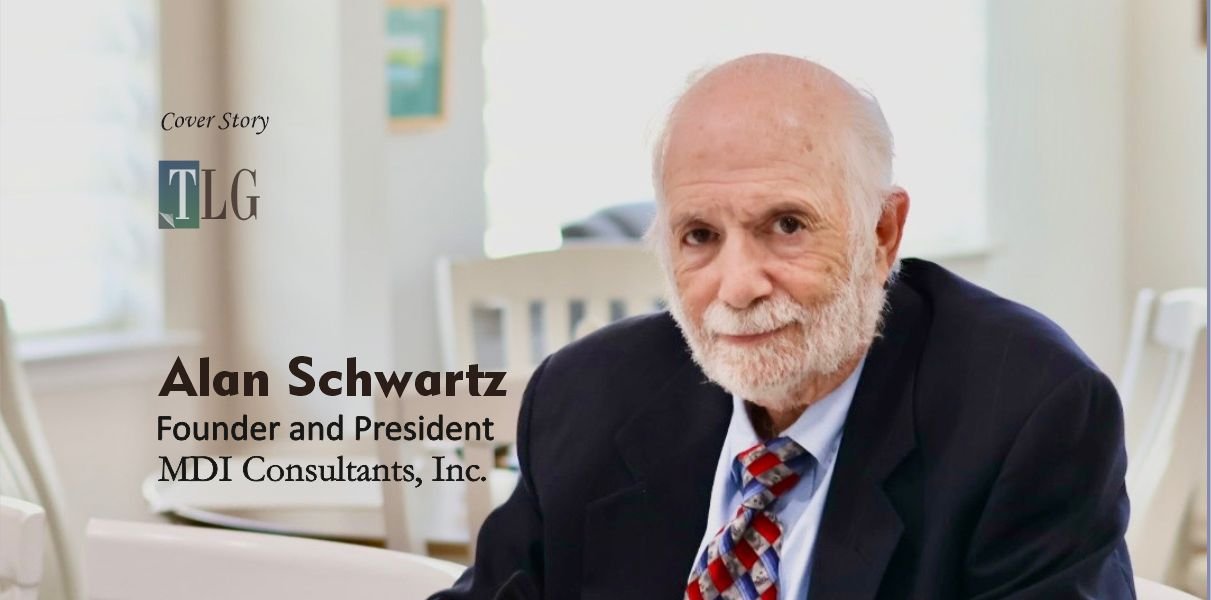
Alan Schwartz, the pioneering Founder and President of mdi Consultants, has spent over five decades turning the opaque, high-stakes labyrinth of international regulatory compliance into a predictable science. A former United States Food and Drug Administration (FDA) field investigator and supervisor, Schwartz recognized early on that a fundamental communication gap existed between federal oversight bodies and medical innovators. In 1978, he founded mdi Consultants to serve as an expert translator and strategic ally for the life sciences sector.
Globally revered for introducing the industry’s first fixed-price consulting blueprint which effectively removed financial unpredictability from regulatory submissions, Schwartz has masterfully guided more than 500 manufacturers and secured over 3,500 successful FDA 510(k) clearances. Today, his firm stands at the leading edge of medical technology, piloting cutting-edge artificial intelligence (AI) diagnostics and robust medical device cybersecurity frameworks through the evolving demands of global healthcare enforcement.
Compliance should never be viewed as a rigid anchor that halts corporate momentum; when executed with absolute structural precision, it becomes the very engine that drives sustainable global growth.
Alan Schwartz
Introduction
True, transformative innovation within heavily regulated industries does not occur by bypassing structural norms; it happens by masterfully understanding them so thoroughly that faster, more secure, and highly efficient pathways emerge. In the high-stakes arena of medical devices, pharmaceuticals, and global diagnostics, navigating the journey from a conceptual blueprint to an officially cleared, market-ready asset is a task often buried under dense legal jargon and unpredictable administrative timelines. For over half a century, Alan Schwartz has served as the definitive anchor of clarity, operational rigor, and strategic purpose within this complex landscape.
His professional journey mirrors the structural evolution of modern healthcare oversight itself. Rising from a dedicated civil servant within the halls of the FDA to become an internationally sought-after corporate consultant and elite expert witness, Schwartz has spent his career dismantling the traditional, adversarial dynamic that often exists between corporate pioneers and government agencies. Instead, he has championed a business philosophy rooted in absolute transparency, mutual accountability, and precise execution. Under his continuous guidance, Great Neck, New York-based mdi Consultants has grown from a survival-driven boutique startup into a globally recognized benchmark for regulatory excellence, showing the life sciences sector that rigid compliance is not a barrier to commercial progress, but the very foundation that makes sustainable innovation possible.
The Academic and Federal Genesis
Like many legendary entrepreneurial journeys, Alan Schwartz’s entry into the world of federal regulation was shaped by a combination of timely adaptability and acute observation. In the spring of 1972, fresh out of college with a degree in biology, Schwartz found himself navigating a severe national economic recession. With traditional corporate research roles exceedingly scarce for life science graduates, he faced a distinct choice between an offer at the Museum of Natural History and an entry-level position as a field investigator for the US FDA. Choosing the latter, despite having little initial familiarity with the agency’s broader organizational scope, Schwartz stepped onto campus at the GS-5 level and immediately discovered his true calling.
The experience proved to be an invaluable operational laboratory. Tasked with inspecting manufacturing plants, evaluating quality control systems, and ensuring strict adherence to federal consumer protection laws, Schwartz rapidly developed a profound, structural understanding of how regulatory policies operate in the field. His natural analytical prowess and capacity for decisive leadership did not go unnoticed; within just five and a half years, he scaled the federal ranks to become a GS-13 level supervisor, managing complex field investigations and guiding teams of inspectors.
Yet, as he sat on the government’s side of the table during high-level compliance meetings, Schwartz observed a critical, systemic friction point. While major multinational corporations possessed the capital to hire extensive legal departments, smaller, highly innovative companies were consistently failing inspections simply because they could not accurately interpret what the FDA was trying to say. They lacked the technical vocabulary to align their quality systems with federal expectations. Recognizing that a profound commercial opportunity existed to bridge this communication gap, Schwartz made a bold, entrepreneurial leap. In the summer of 1978, backed by six years of elite insider experience, he resigned from his stable federal post to launch his own independent consulting practice, setting out to democratize regulatory mastery for the broader medical community.
Shaping Early Pillars and Industry Values
The timing of Schwartz’s entrepreneurial transition coincided with a monumental, historic paradigm shift in American healthcare law. Following the landmark Medical Device Amendments of 1976, the FDA officially enacted the Good Manufacturing Practices (GMP) for medical devices in the spring of 1978. Suddenly, thousands of businesses across the country were legally mandated to implement highly sophisticated quality tracking systems, internal product audits, and comprehensive component validation protocols without any prior blueprint for doing so.
Schwartz capitalized on this regulatory sea change by instantly positioning his new venture as an expert interpreter of the newly minted laws. Having written and enforced similar protocols from the inside, he understood that long-term compliance could not be achieved through corporate arrogance or defensive maneuvers. He had seen firsthand that when companies attempted to outmaneuver or hide systemic flaws from federal investigators, minor operational glitches invariably escalated into catastrophic, business-halting enforcement actions.
“You learn far more from examining the companies that face severe regulatory hurdles than from those that smoothly cruise through compliance. The ultimate differentiator is always management’s willingness to confront an operational problem immediately, transparently, and with data-backed accountability.”
This core realization became the foundation of his consulting philosophy. Schwartz began training corporate executives to abandon adversarial mindsets and instead approach federal oversight with a spirit of collaborative compliance. By teaching leadership teams to design quality control mechanisms that actively anticipated the reviewer’s expectations, mdi Consultants began carving out an unmatched reputation for securing seamless, first-time regulatory approvals.
Redefining Consulting Economics: The Fixed-Price Framework
As mdi Consultants began to scale its operations globally, Schwartz grew increasingly frustrated with the traditional, counterproductive billing structures that dominated the legal and corporate advisory sectors. The standard hourly billing culture frequently incentivized drawn-out timelines, created massive budget overruns, and severely penalized resource-constrained startups trying to bring life-saving technologies to market.
Driven by a desire to inject absolute predictability and trust into the client-consultant relationship, Schwartz introduced a radical corporate innovation: the fixed-price consulting model. Under this revolutionary framework, mdi Consultants completely eliminated hourly tracking and hidden administrative fees. Instead, the firm evaluated a client’s specific device or quality system upfront, mapped out the exact multi-stage regulatory trajectory required for approval, and delivered a single, unalterable price for the entire scope of work.
This model effectively shifted the execution risk entirely onto mdi’s shoulders. If a submission required additional documentation revisions or deeper analytical reviews to satisfy an agency investigator, the client paid nothing extra. This bold strategy forced mdi’s internal teams to develop exceptionally streamlined documentation workflows, highly meticulous pre-submission validation methods, and a level of operational efficiency that competitors utilizing hourly billing simply could not match. For small-to-midsized medical device manufacturers, this framework proved entirely transformative, offering them a predictable financial runway to enter the lucrative US market with total confidence.
Cultivating a Stable Architecture of Talent
When analyzing the sustained global footprint of mdi Consultants which now spans the successful management of over 1,000 international clients, Schwartz consistently points away from his individual achievements and credits the enduring stability of his workforce. In an industry notorious for rapid corporate turnover and high talent poaching, Schwartz has engineered an internal culture focused on deep specialization, lifelong mentorship, and extreme loyalty.
It is common to find senior consultants, lead auditors, and regulatory strategists at mdi who have been with the organization for 20, 30, or even 40-plus years. This profound institutional memory ensures that when a client presents a complex quality assurance hurdle, the mdi team can draw upon decades of historical precedents, matching the problem against identical challenges they have successfully resolved in past decades.
Furthermore, this internal ecosystem of expertise is continuously enriched through a highly structured, hands-on academic internship program. mdi actively recruits elite graduate students pursuing advanced degrees in regulatory affairs and life science management. Rather than assigning these rising professionals to superficial clerical duties, Schwartz embeds them directly alongside senior consultants. Interns actively participate in cutting-edge regulatory research, cross-border client communications, and real-world government agency follow-ups. By providing these young scholars with rigorous, front-line experience in dealing with federal staff, mdi systematically shapes the next generation of compliance leaders, frequently transitioning top-performing interns into permanent, full-time consulting roles within the firm.
Overturning the Impossible: A Case Study in Mastery
While mdi Consultants possesses an illustrious track record of securing standard product clearances, the true measure of Schwartz’s strategic precision is illustrated by his firm’s rare ability to reverse seemingly terminal regulatory decisions. In the FDA review pipeline, receiving a Non-Substantial Equivalence (NSE) determination for a medical device is traditionally considered an absolute, business-ending roadblock. An NSE means the agency has officially concluded that a new technology is either fundamentally unsafe, structurally unproven, or too drastically different from existing predicate devices to be legally marketed.
A defining moment in mdi’s history occurred when an international medical manufacturer received an NSE determination for an exceptionally sophisticated, high-risk Gamma Rays Stereotactic Radiation Therapy System used in advanced oncology treatments. Rather than accepting commercial defeat, Schwartz mobilized his elite technical teams to mount a comprehensive regulatory counteroffensive.
Drawing upon his deep insider knowledge of federal reviewer mindsets, Schwartz systematically dissected every line of the agency’s objection. The mdi team completely re-engineered the product’s substantial equivalence narrative, gathered exhaustive secondary clinical datasets, and restructured the underlying engineering arguments with absolute scientific defensibility. Through a series of intense, data-driven negotiations, mdi accomplished what few consulting firms in history have ever achieved: they successfully convinced the FDA to completely overturn the NSE ruling. Proving this victory was no fluke, Schwartz’s firm went on to duplicate this exact feat for a second highly complex medical tech device, solidifying mdi’s reputation as the ultimate partner for navigating the most volatile, high-stakes scientific standoffs in the life science industry.
Global Navigation and the US Agent Vanguard
As global economies have grown increasingly interconnected, the regulatory boundaries dividing international healthcare markets have undergone a profound evolution. Today, agencies like the US FDA and the European Medicines Agency (EMA) are moving steadily toward a unified regulatory framework, characterized by cross-border harmonizations like the Medical Device Single Audit Program (MDSAP). This shifting landscape presents an intricate challenge for international manufacturers trying to expand into the Western hemisphere, as they must continuously align their local factories with foreign documentation styles, distinct cultural communication norms, and rapidly shifting oversight rules.
Under Schwartz’s strategic vision, mdi Consultants stepped into this global gap by establishing a premier, specialized US Agent division. For over 500 foreign manufacturers spanning Asia, Europe, and Latin America, mdi serves as the official, legally designated liaison directly responsible for all communications with the United States government.
Rather than acting as a passive mail forwarding service, Schwartz’s team provides comprehensive, cross-border hand-holding. They actively guide foreign executive boards through the complex realities of American cGMP (Current Good Manufacturing Practice) audits, prepare their international facilities for unannounced foreign inspections, and help them seamlessly adapt to the FDA’s integration of ISO 13485 quality management standards. This active, stabilizing presence has allowed hundreds of global innovators to scale their commercial operations internationally while remaining entirely resilient against cross-border compliance failures.
Pioneering the Next Frontier: AI and Cybersecurity
Even as he looks back on a career spanning more than 53 years of professional excellence, Alan Schwartz remains fiercely focused on the future, actively preparing his clients for the next massive wave of technological disruption. He notes that the rapid convergence of digital health platforms, robotics, and advanced generative software has brought the medical device industry to a critical crossroads.
Schwartz was one of the earliest pioneers to recognize the regulatory complexities of artificial intelligence in healthcare. Decades ago, mdi Consultants successfully guided the regulatory filing for one of the world’s very first AI-assisted medical devices, a sophisticated computational system used by laboratory pathologists to detect irregular, pre-cancerous cells during routine pap smear reviews.
Simultaneously, as software-driven, interconnected medical devices become highly vulnerable to digital infrastructure breaches, mdi has established an elite cybersecurity compliance pipeline. In direct response to stringent federal mandates like Section 524B of the FD&C Act, Schwartz has forged powerful strategic alliances with specialized cyber-intelligence firms. This allows mdi to deliver advanced, military-grade penetration testing, software validation, and ISO 27001-aligned data security architecture alongside traditional regulatory filings.
By embedding robust risk mitigation directly into the initial product design phase, Schwartz ensures that his clients’ cutting-edge assets are structurally fortified to clear intense government scrutiny and protect patient safety from the moment of commercial launch.
An Enduring Legacy and Global Outlook
An Enduring Legacy and Global Outlook
As Alan Schwartz transitions his daily focus toward high-level strategic advisory roles, international speaking engagements, and serving as a globally revered expert witness in high-stakes corporate litigation, his impact on the discipline of operations management remains indisputable. Having built an enterprise that has secured the clearance of thousands of life-enhancing technologies, his professional footprint stands as a masterclass in combining analytical precision with deep institutional empathy.
His potential future endeavors include authoring a comprehensive biographical text, translating his decades of global travel, intense federal investigations, and landmark legal testimonies into a structured blueprint for the next generation of entrepreneurial leaders. For Alan Schwartz, the core objective has never been about chasing quick, short-term corporate profits or building a personal empire on empty marketing claims; it has always been about establishing an enduring sanctuary of trust, technical mastery, and structural integrity that empowers innovators to heal the world safely.
FAQs
Who is Alan Schwartz?
Alan Schwartz is a globally recognized regulatory compliance expert, former FDA investigator, and the Founder and President of mdi Consultants. With over 53 years of experience in healthcare law and quality management, he is celebrated for developing risk-mitigated strategies that help life science companies navigate complex federal approval pipelines.
What is mdi Consultants known for?
mdi Consultants is an elite international regulatory consulting firm that guides medical device, pharmaceutical, and food manufacturers through FDA compliance and ISO certifications. The firm is industry-renowned for pioneering fixed-price consulting models and securing more than 3,500 FDA 510(k) product clearances.
What inspired Alan Schwartz to transition from the FDA to consulting?
While serving as an FDA supervisor, Schwartz noticed that many small, innovative medical companies failed critical inspections simply because they could not accurately interpret complex federal mandates. He launched his consulting practice to bridge this communication gap and democratize regulatory mastery.
How does mdi Consultants handle AI-driven medical technologies?
The firm uses a rigorous, data-first strategy that focuses on educating developers about the limitations of generative software. By helping sponsors design targeted, isolated clinical studies for specific medical indications, mdi prevents the rejections that happen when companies rely on overly broad AI claims.
What is the significance of mdi Consultants serving as a “U.S. Agent”?
As a designated U.S. Agent, mdi acts as the official, legally required liaison between the U.S. government and over 500 foreign manufacturers. The firm actively guides international companies through cross-border compliance, preparing their global facilities for unannounced FDA inspections and aligning them with American documentation standards.
You learn far more from examining the companies that face severe regulatory hurdles than from those that smoothly cruise through compliance. The ultimate differentiator is always management’s willingness to confront an operational problem immediately, transparently, and with data-backed accountability.
Alan Schwartz
Key Takeaways
- Deconstructing Complexity: True operational innovation within regulated sectors requires a proactive, deeply empathetic understanding of oversight agency expectations, replacing adversarial corporate defense with data-driven transparency.
- The Power of Financial Predictability: Introducing structured, fixed-price consulting frameworks fosters extreme corporate accountability, shifts execution risk onto the strategist, and democratizes market access for resource-constrained startups.
- Institutional Memory Asset: Longevity in team construction—retaining elite talent across multiple decades—builds an irreplaceable repository of historical precedents that drastically accelerates modern problem-solving.
- Fortifying the Connected Future: As medical tech evolves, robust cybersecurity validation and rigorous penetration testing must be seamlessly integrated into standard regulatory filings to ensure long-term patient safety.
- Resilience in Execution: Even a seemingly terminal regulatory roadblock, such as an official FDA Non-Substantial Equivalence determination, can be completely reversed through meticulous documentation re-engineering and uncompromised scientific rigor.
 Magazine