


 admin

How Leading Organizations Combine Human Judgment with Automation to Drive Results
Quick Summary
Modern corporate performance faces a widening gap between aggressive technological ambition and decreasing workforce readiness. True efficiency does not come from replacing human workers with algorithms, but from deliberately rebuilding outdated tasks around collective capability. By combining machine processing volume with human judgment and empathy, companies can dramatically shorten operational cycles.
Overcoming integration friction requires transparent, equal training access to build deep workforce trust while migrating to agile, skills-first frameworks. Ultimately, organizations must move away from simple automation experimentation to intentionally orchestrate systems where technology amplifies irreplaceable human traits.
Introduction
Corporate performance goals are undergoing a massive shift. Market volatility remains high, profit margins are tight, and growth is difficult to generate. Boardrooms globally are demanding immediate returns on technology investments.
At the same time, the human systems driving these businesses are showing signs of strain. Global studies indicate that employee thriving has dropped significantly over the past two years. A tired workforce cannot deliver exponential growth. Leaders must fix this gap. The solution lies in creating a balanced partnership between people and intelligent tools.
Industry Context
Many companies try to add artificial intelligence to outdated work models. They use rigid corporate roles and slow decision systems. This approach creates a clear divide in modern corporate data.
- The Vision: Over half of senior executives believe that rebuilding tasks around technology will yield the highest returns.
- The Reality: Only about one-third of leaders feel their teams can blend human skills with machine tools today.
Adding software to unchanged roles creates faster activity but does not guarantee better business outcomes.
Key Trends
The corporate world is experiencing the rise of entirely new professional paths. These roles require professionals to bridge the gap between digital logic and corporate strategy.
- Prompt Engineering: Specialists who design complex logic to ensure machine outputs are reliable and safe.
- Governance and Compliance Managers: Professionals who ensure corporate technology usage remains legal and unbiased.
- Automation Architects: Systems planners who integrate digital tools with human workflows to eliminate daily operational friction.
- Data Curators: Experts who clean and organize high-quality information to train specific corporate models.
Deconstructing the New Efficiency Equation
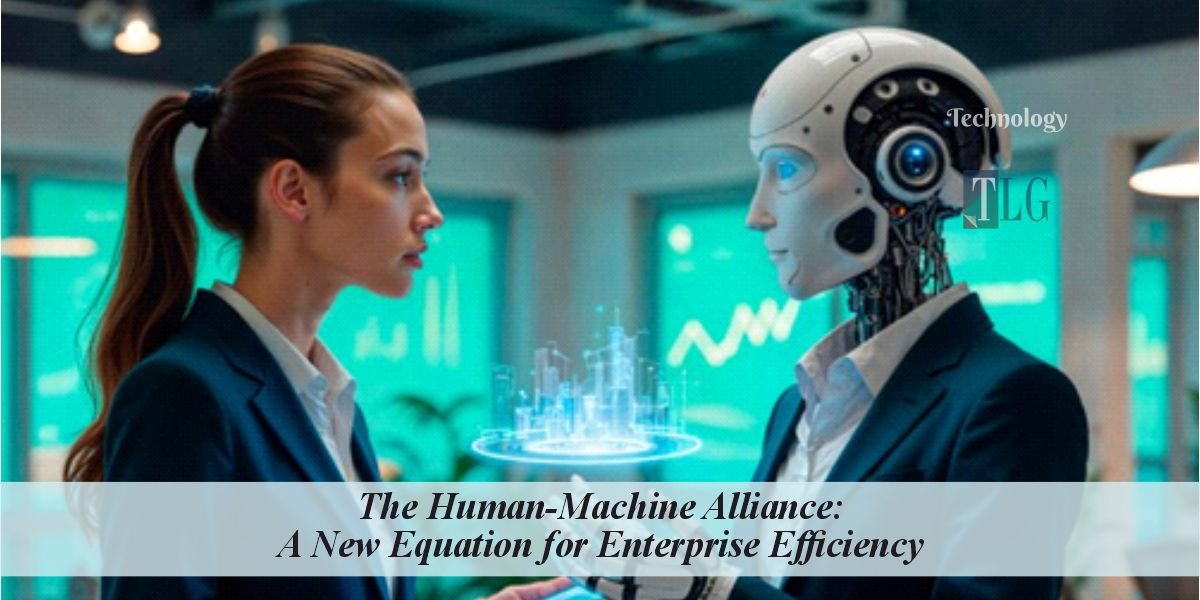
To calculate the true value of tech investments, businesses must look beyond simple time savings. The old efficiency formula focused purely on reducing human hours. The new equation multiplies machine volume by the quality of human oversight.
When software handles data collation, professionals spend their energy analyzing anomalies and contextualizing results. This combination shortens product development cycles and accelerates client delivery times. True efficiency means achieving superior outcomes, not just executing tasks at higher speeds.
Overcoming the Friction of Integration
The transition to intelligent workflows often meets resistance due to poor system deployment, especially when leaders introduce advanced software without updating daily operational pipelines.
The following is a strategic framework designed to eliminate operational friction and smooth the deployment process:
- Map Task Dependencies Explicitly: Management must outline exactly where a tool assists and where a human decision becomes necessary.
- Establish Clear Boundaries: Defining precise operational limits prevents staff from double-checking automated outputs unnecessarily.
- Build Direct Communication Loops: Creating open channels between technical teams and front-line workers minimizes daily operational downtime.
- Update Legacy Pipelines First: Modifying traditional workflows before adding software ensures new tools fit the business model.
- Align Incentives with New Tools: Changing performance metrics encourages teams to accept automated assistance rather than resist it.
Cultivating a Skills-First Corporate System
Emphasizing static job descriptions limits corporate agility during technological shifts. Forward-thinking enterprises are moving toward a fluid skills-first architecture.
This model tracks the specific capabilities of the workforce rather than rigid titles. When business needs change, leaders deploy internal talent based on demonstrated skills. This flexibility helps companies reallocate human resources swiftly as automated systems absorb routine administrative workloads.
Leadership Insights
When operational risks increase, people risk becomes enterprise risk. Modern workers frequently experience anxiety regarding rapid automation. Over 35% of employees state they would consider leaving if they face unequal access to digital training.
A workforce that mistrusts change cannot sustain a business transformation. Leaders must upgrade human resources from a basic administrative function into a core work architect. Enterprise success now depends on transparency and equal tool distribution.
Expert Perspective
“Human intelligence learns from dynamic, real-world interaction, not from static datasets,” states Josh Tenenbaum, a cognitive scientist at MIT.
Technology lacks a moral compass and cannot simulate true human experience. Experienced executives rely on specific qualities that algorithms cannot replicate:
- Instinct for Rapid Crisis Management: This represents the capacity for immediate, real-time choices made during acute corporate crises. Lived experiences trigger fast physiological and psychological responses, allowing seasoned executives to stabilize panicking teams before data can be compiled.
- Intuition via Deep Pattern Recognition: This sophisticated form of subconscious intelligence goes far beyond simple numeric calculations. It integrates years of cognitive signals, missed steps, and sensory cues to read emotional changes in a boardroom.
- Imagination for Visionary Enterprise Thinking: This unique mental capacity allows individuals to dream up bold, unprecedented ideas for the corporate future. It combines unrelated concepts to challenge existing market boundaries, inspiring teams to build what does not yet exist.
- Integrity Rooted in a Moral Core: This strategic virtue aligns daily corporate actions with core human values, even under intense commercial pressure. While automated systems carry out instructions rigidly, only human leaders possess the ethical reasoning to prioritize fairness.
Future Outlook
The corporations that excel in the coming years will avoid random experimentation. Instead, they will rebuild workflows with clear intent. They will treat advanced software as an amplifier of talent rather than a cheaper replacement.
True value emerges when automated speed combines with human empathy and strategic nuance. The goal is no longer just to complete tasks. The goal is to guide the tools that execute the work.
FAQs
Does implementing artificial intelligence mean fewer corporate jobs?
No. It shifts the corporate focus away from hours spent on a task toward output quality and human judgment.
What is the biggest risk when adopting new workplace technology?
The greatest risk is applying automation to a broken process, which merely creates a faster version of a mistake.
How can a company build digital trust among employees?
By providing equal access to training, establishing ethical rules, and rewarding a culture of constant learning.
What defines a skills-first corporate system?
It is an operating model that values employees for their specific capabilities rather than their formal job titles.
How do leaders measure the success of human-machine collaboration?
Success is measured by improved decision-making accuracy, faster project delivery, and sustained employee engagement scores.
Key Takeaways
- Rebuild Core Workflows Deeply: Do not just layer complex digital software onto archaic corporate structures. True value requires matching modern tools with updated, flexible team responsibilities.
- Prioritize Workforce Trust Actively: Reduce widespread employee anxiety by offering transparent training initiatives. Ensuring equal access to upskilling prevents talent attrition and keeps corporate morale high.
- Value Irreplaceable Human Qualities: Rely heavily on instinct, empathy, and integrity for highly nuanced decisions. While algorithms process vast datasets rapidly, only people can navigate volatile crises ethically.
- Aim for Scaled Excellence over Replacement: Use automated systems to manage heavy administrative workloads. This targeted shift frees human professionals to focus exclusively on creativity and strategy.
- Transition to Skills-Based Agility: Shift focus away from rigid, traditional job descriptions toward fluid talent deployment. Tracking specific employee capabilities allows organizations to reallocate resources quickly as automated systems absorb routine tasks.
Conclusion
Exponential business performance never happens by accident. It requires corporate leaders to redesign old operating systems and build cultures of trust. Organizations must decide whether to architect true human-machine collaboration or continue patching outdated work models.Balancing machine precision with human ingenuity creates an unshakeable competitive advantage. The ability to orchestrate this blend will define the market leaders of tomorrow.
 Magazine