


 admin
admin The modern boardroom is no longer just a circle of human minds. Today, a silent participant sits at the table in the form of the algorithm. This digital guest processes data at speeds no human could ever hope to match. It spots complex trends in seconds and predicts market shifts with eerie precision. Yet, as its influence grows, a vital question emerges for the C-Suite. Leaders must decide how to balance cold machine logic with the warm pulse of human morality.
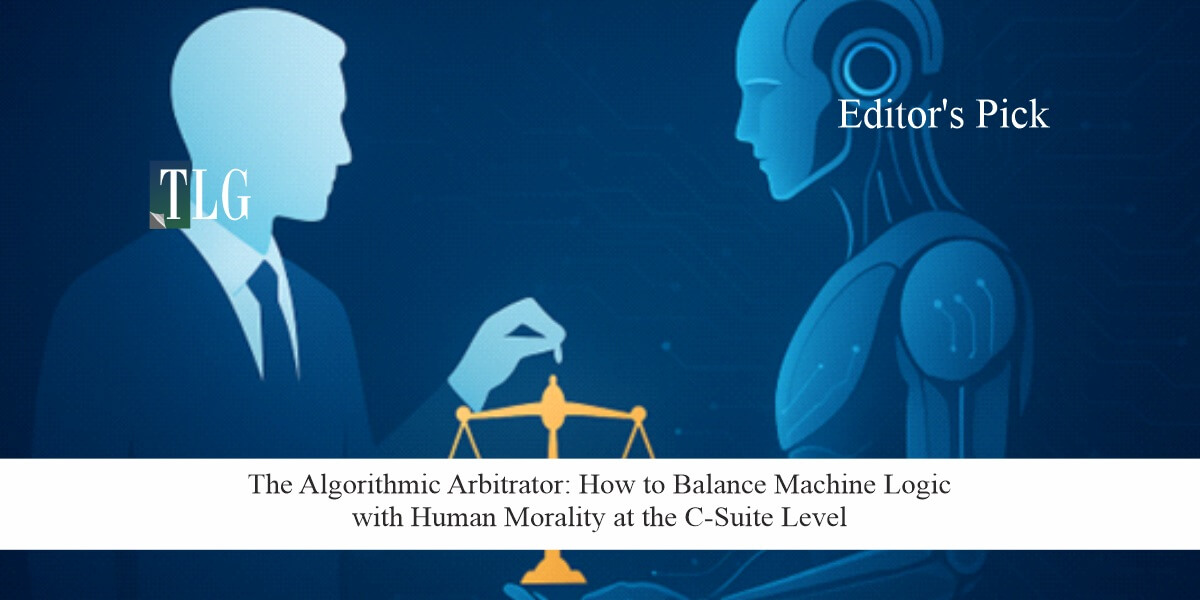
In the corporate world, the “Algorithmic Arbitrator” is the framework that bridges these two distinct worlds. It serves as the middle ground where operational efficiency meets genuine empathy.
The Allure of the Digital Mind
Algorithms are highly prized because of their total objectivity. They do not get tired, nor do they have bad days or personal moods. For a modern CEO, this level of consistency is a powerful strategic asset. Machine logic can sift through millions of customer data points to find the perfect price point. It can scan thousands of resumes to find the ideal candidate without the unconscious bias that often trips up humans.
As Stephen Hawking once noted, “Everything that civilization has to offer is a product of human intelligence; we cannot predict what we might achieve when this intelligence is magnified by the tools AI may provide.”
However, pure logic always has its limits. A machine might suggest closing a factory simply because the numbers are down. It sees a cold spreadsheet rather than the three hundred families who rely on those jobs. This is exactly where the human leader must step in to provide clarity.
The Moral Blind Spot
Machine logic is built entirely on historical data. If that data is flawed or biased, the machine will simply repeat those flaws at scale. This creates a “black box” problem where a computer makes a choice but cannot explain why it did so.
For a leadership team, relying strictly on these “black boxes” is a massive risk. A machine might maximize short-term profit while accidentally destroying the company’s long-term reputation. It lacks the “gut feeling” that warns a veteran executive when a specific path feels morally wrong.
- Logic versus Intuition: Machine logic focuses strictly on the “how” and “how much” by analyzing mathematical patterns in historical numbers.
- Morality and Purpose: Human morality focuses on the “why” and “should we” by looking at the bigger social picture and long-term impact.
- The Contextual Gap: Machines lack the inherent ability to understand office culture or the emotional weight of a difficult corporate choice.
Designing the Digital Compass
Before a single line of code is written, leaders must define their core values. A digital compass ensures the algorithm follows the heart of the company rather than just the data. If a firm values environmental safety, the AI must be taught that profit never comes before the planet.
This phase requires the C-Suite to be very vocal about what they stand for as a brand. Without these specific rules, the machine will hunt for efficiency at any cost. A leader’s primary job is to ensure that the cost is never the company’s integrity.
Leading with “Human-in-the-Loop”
The best C-Suite leaders now use a “human-in-the-loop” strategy for all major decisions. This means the algorithm proposes a specific path, but a human always holds the final vote. It turns the machine into a helpful advisor rather than a final boss.
This approach ensures that every high-stakes decision passes through a rigorous moral filter. If an AI suggests a new marketing strategy, a human checks to see if it is truly ethical. If a system flags a suspicious financial trade, a person investigates the actual context behind the numbers. This blend creates a “Hybrid Intelligence” that is both incredibly fast and consistently fair.
Five Pillars of the Ethical Boardroom
To act as an effective arbitrator, the C-Suite should follow these expanded rules for digital governance:
- Radical Transparency: Leaders must always understand the logic and data sources that the algorithm uses to arrive at its final answer.
- Total Accountability: A human executive must take full legal and moral responsibility for every decision made by a digital system.
- Active Empathy: Teams must stop to ask how a digital choice affects real people and communities, not just the data points on a screen.
- Intentional Diversity: Companies should use diverse teams to build and monitor AI systems to identify and remove hidden social biases early in the process.
- Strategic Humility: Leaders must accept that a machine might be wrong in complex social situations and be ready to override it when necessary.
Maintaining Public Trust
Trust is the most fragile asset in any modern business. When a company lets an algorithm make cold choices without oversight, customers will eventually notice. A leader who successfully balances logic and morality builds a brand that people truly respect.
This balance shows the public that the company is run by humans for the benefit of humans. It proves that technology is used to help people rather than just to process them. In a world of increasing automation, a human touch becomes a massive competitive advantage for any firm.
Conclusion
The goal for the future is not to choose between man and machine. The goal is to learn how to combine them effectively. When logic and morality work together, businesses become more than just profit-making engines. They become genuine forces for good in the world.
As Ginni Rometty, former CEO of IBM, said: “Artificial intelligence will transform the relationship between people and technology, charging our creativity and skills.” The machine provides the logic, but the leader provides the soul. Together, they navigate a future where technology serves the best interests of humanity.
 Magazine