


 admin

MMX Spacecraft Set to Reach Mars in 2027 and Return Phobos Samples by 2031
Quick Summary
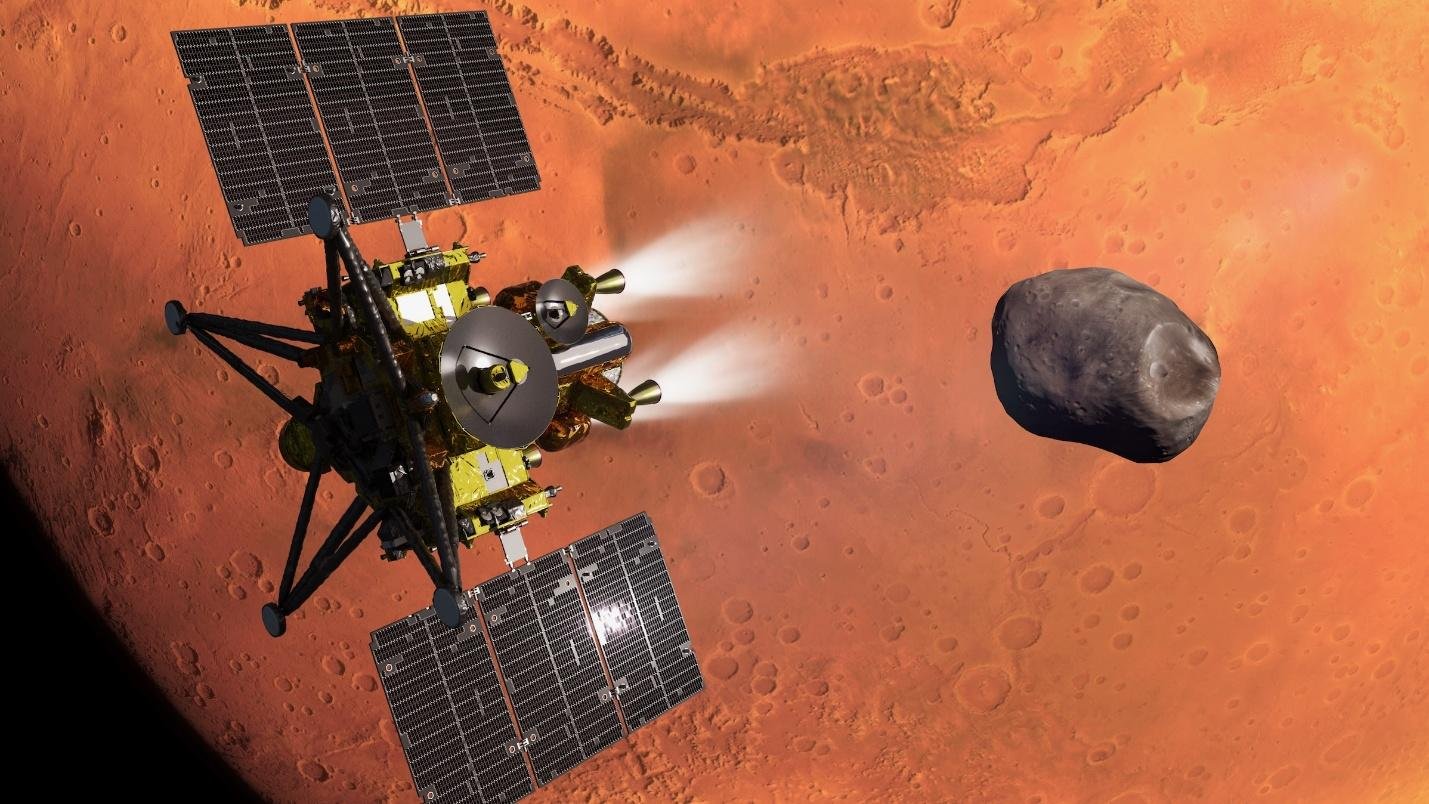
Japan launched its Mars Moon Phobos sample return mission on October 20, 2026, marking a significant milestone in planetary exploration. The uncrewed Martian Moons eXploration (MMX) spacecraft lifted off aboard an H3 rocket from the Tanegashima Space Center in southwestern Japan.
The mission aims to collect at least 10 grams of surface material from Phobos, Mars’ larger natural moon. The spacecraft is expected to reach the Martian system in August 2027 and return its collected samples to Earth in 2031. Scientists hope the mission will reveal important clues about the origins of Mars’ moons and the early development of the solar system.
Introduction
Japan has launched an ambitious space mission to collect samples from Phobos, one of Mars’ two natural moons. The spacecraft began its journey before dawn on Tuesday, October 20, aboard the country’s H3 rocket. Its launch from the Tanegashima Space Center marks an important development in Japan’s planetary exploration programme.
The mission seeks to bring Martian moon material to Earth, allowing scientists to examine its composition and investigate its origins. These findings could offer valuable insights into the formation of planetary bodies and the solar system’s earliest stages.
Japan Begins Historic Phobos Sample Return Mission
Japan’s Martian Moons eXploration mission aims to achieve a major scientific milestone by collecting and returning samples from Phobos. The spacecraft will attempt to gather at least 10 grams of material from the moon’s surface for detailed laboratory analysis. Scientists expect these samples to provide direct evidence about Phobos’ composition and formation.
The research could also help clarify the relationship between Mars and its two natural satellites. By bringing extraterrestrial material back to Earth, the mission will give researchers opportunities to conduct detailed examinations using advanced scientific equipment.
Phobos Offers Valuable Clues about Mars
Phobos, the larger of Mars’ two natural moons, has an irregular shape and distinctive orbital characteristics. It measures approximately 27 kilometres by 22 kilometres by 18 kilometres and circles Mars around 6,000 kilometres above the planet’s surface. The moon completes roughly three orbits around Mars every Earth day, making it an unusual object for planetary research.
Its surface material could preserve important evidence about the moon’s origin and its long history within the Martian system. Scientists hope studying these samples will help explain how Phobos formed and developed over billions of years.
Japan’s H3 Rocket Enters Interplanetary Exploration
The launch marks the first interplanetary mission for Japan’s H3 rocket, adding another important milestone to the country’s space programme. The launcher experienced a major setback during its inaugural flight in 2023, when its second-stage engine failed to ignite. Since that unsuccessful debut, the rocket has completed several mostly successful launches, supporting Japan’s continuing space ambitions.
Its role in the MMX mission highlights the importance of reliable launch systems for complex planetary exploration projects. The mission will also demonstrate the H3 rocket’s capabilities during a journey extending far beyond Earth’s immediate surroundings.
Mission Could Reveal the Solar System’s Early History
The MMX mission aims to deepen scientific understanding of Phobos, Mars’ moons, and the early solar system. By examining the returned material, researchers hope to investigate the processes that shaped these small celestial bodies. The samples could help scientists assess competing explanations for the origins of Mars’ moons and their relationship with the planet.
Laboratory analysis on Earth will allow researchers to study the material in greater detail than remote observations alone can provide. These findings could contribute important evidence to broader investigations into planetary formation and the evolution of our cosmic neighbourhood.
FAQs
1. What is Japan’s Phobos sample return mission?
Japan’s Martian Moons eXploration mission aims to collect surface material from Phobos and return it to Earth for detailed scientific analysis.
2. When will Japan’s MMX spacecraft reach Mars?
The MMX spacecraft is expected to reach the Martian system in August 2027, following its journey from Earth aboard Japan’s H3 rocket.
3. How much material will the MMX mission collect?
Japan aims to collect at least 10 grams of Phobos surface material, giving scientists valuable samples for investigating the moon’s composition and origins.
4. When will the Phobos samples return to Earth?
The mission currently targets 2031 for returning collected samples to Earth, where researchers can conduct detailed laboratory investigations.
5. Why is Japan studying Phobos?
Japan hopes studying Phobos samples will clarify the origins of Mars’ moons and improve scientific understanding of planetary formation and the early solar system.
Key Takeaways
- Japan launched its uncrewed MMX spacecraft toward Mars aboard the H3 rocket on October 20, 2026.
- The mission aims to collect at least 10 grams of surface material from Phobos for scientific research.
- Phobos measures approximately 27 by 22 by 18 kilometres and orbits around 6,000 kilometres above Mars.
- The spacecraft is expected to reach the Martian system in August 2027 and return samples during 2031.
- Scientists hope the mission will reveal clues about the origins of Mars’ moons and the solar system’s early development.
Conclusion
Japan’s Phobos sample return mission represents an important step towards understanding the origins of Mars’ natural satellites. The MMX spacecraft carries ambitious scientific objectives that could expand knowledge of planetary formation and evolution. Its planned sample collection will give researchers access to material gathered directly from Phobos’ surface.
The findings could also help scientists investigate the early history of the solar system with greater precision. As the spacecraft begins its journey, the mission marks a significant chapter in Japan’s continuing pursuit of planetary discoveries.
 Magazine