


 admin
admin 
Apple Faces Microsoft and Nvidia in the Growing On-Device AI Market
Quick Summary
Apple is positioning its new Macs as powerful machines for businesses handling demanding artificial intelligence workloads. The company expects local AI processing to help businesses reduce recurring expenses linked with cloud-based computing services. Microsoft and Nvidia are also developing technologies that support the growing demand for on-device artificial intelligence processing.
Apple’s unified memory architecture gives its computers a closely connected approach to handling demanding AI workloads. However, Apple’s smaller enterprise presence remains a major challenge against Microsoft’s dominant Windows ecosystem.
Introduction
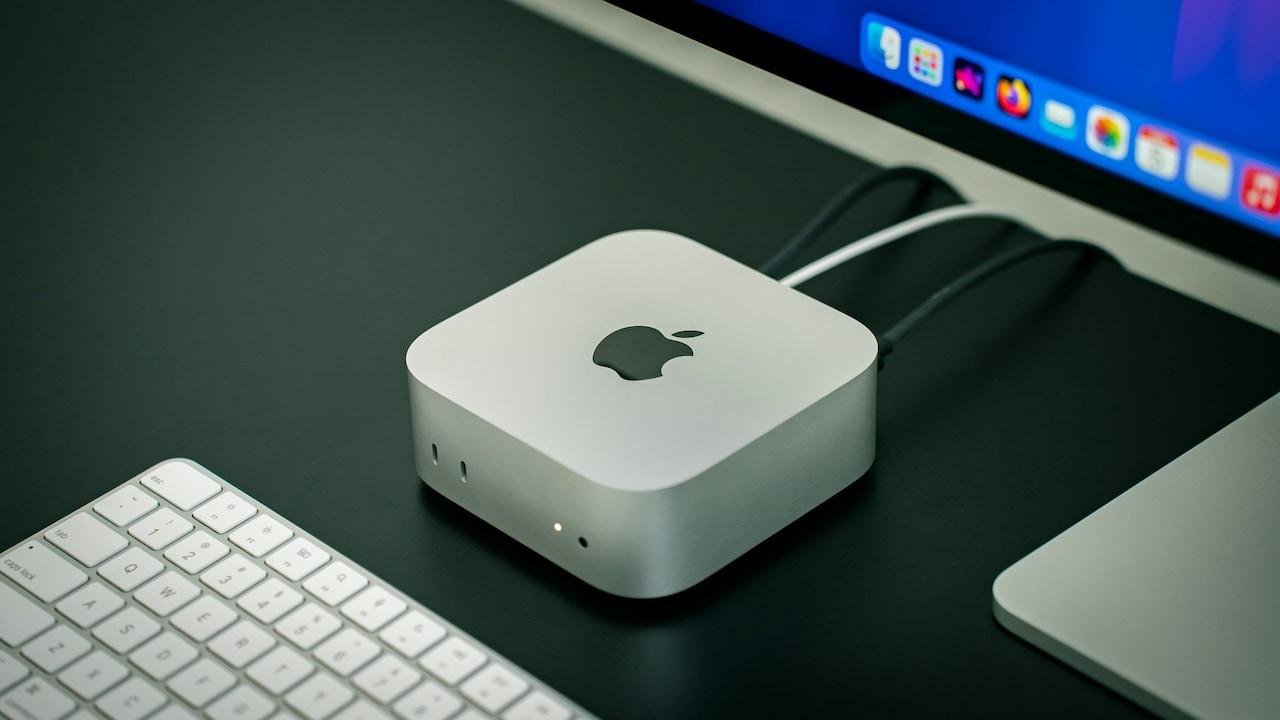
Apple Macs for AI are entering corporate computing as businesses search for more predictable and manageable artificial intelligence costs. The upgraded Mac Mini and Mac Studio can perform demanding AI workloads directly on local hardware instead of relying entirely on data centers.
Apple believes this approach could help businesses reduce continuous spending associated with cloud-based AI processing and token usage. However, Apple’s position within enterprise computing remains considerably smaller than Microsoft’s long-established Windows presence.
Apple Macs for AI Target Corporate Computing Costs
Apple’s new desktop computers target businesses running intensive artificial intelligence workloads locally. These systems can support coding, software development and complex business operations without constant cloud processing. This approach could help businesses reduce recurring charges linked with external AI computing services.
However, high-end configurations can approach $20,000, depending on hardware and performance requirements. Apple argues that frequent usage could justify this upfront investment for businesses with sustained AI workloads.
Unified Memory Strengthens Apple’s Local AI Strategy
Apple’s unified memory architecture connects computing resources and memory more closely within its chip design. The company originally developed this approach to improve efficiency across battery-powered consumer devices. However, the architecture also helps Macs manage demanding AI workloads requiring substantial memory and processing capacity.
Apple recently demonstrated four Mac Studio computers processing a model containing approximately one trillion parameters. The systems identified and fixed a graphics coding problem while operating through local processing. Such workloads usually require substantial data-center infrastructure and significant computing resources.
Apple Faces Microsoft and Nvidia in AI Computing
Microsoft is also promoting on-device AI as businesses seek greater control over recurring computing expenses. Microsoft has described this approach as unmetered intelligence for AI capabilities running directly on personal devices. Nvidia remains strongly established in data-center AI while expanding its presence across AI-focused personal computing hardware.
Apple faces another challenge through Microsoft’s dominant position in enterprise computing. Apple holds approximately 4.6% of the enterprise desktop and laptop market, compared with Windows at 91.3%, according to IDC data cited in the report. Still, Apple believes shared chip principles can help AI models scale across Macs, iPhones and iPads.
FAQs
Why is Apple targeting AI workloads with Macs?
Apple wants businesses to process demanding AI workloads locally while potentially reducing recurring expenses associated with cloud-based computing.
How much can Apple’s AI-focused Macs cost?
High-end Mac configurations can approach $20,000, depending on the selected hardware specifications and performance requirements.
Why does unified memory matter for AI?
Unified memory connects computing and memory resources closely, helping Macs manage demanding artificial intelligence workloads efficiently.
How did Apple demonstrate large-scale AI computing?
Apple connected four Mac Studio computers and used them together to process a trillion-parameter artificial intelligence model.
Who competes with Apple in on-device AI?
Microsoft and Nvidia are developing technologies that support the growing demand for artificial intelligence processing on personal computers.
Key Takeaways
- Apple is targeting businesses seeking greater control over artificial intelligence computing expenses.
- New Macs can process demanding AI workloads locally without recurring charges for individual cloud-based tokens.
- Apple’s unified memory architecture supports its strategy for handling increasingly demanding artificial intelligence workloads.
- Microsoft and Nvidia are expanding their own technologies for on-device artificial intelligence computing.
- Apple’s smaller enterprise market share remains a significant challenge against Microsoft’s established Windows ecosystem.
Conclusion
Apple is positioning its latest Macs as powerful options for businesses running increasingly demanding artificial intelligence workloads. The strategy focuses on local processing, which could help companies manage recurring AI computing expenses more predictably. Apple’s unified memory architecture also provides a foundation for handling large models across its hardware ecosystem.
However, Microsoft’s strong enterprise presence gives Windows a substantial advantage across corporate desktop and laptop computing. Apple’s ability to expand business adoption will depend on how companies evaluate performance, costs and existing hardware environments.
 Magazine