


 admin
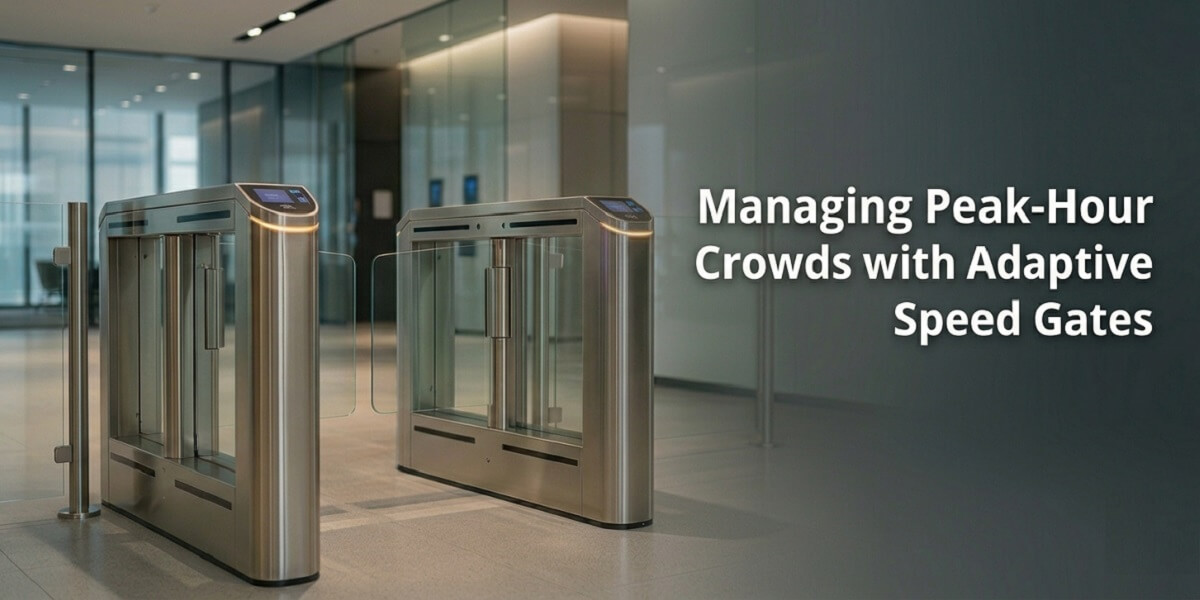
admin Peak-hour movement puts real pressure on entry points, especially at sites that need both fast access and reliable control. Construction compounds, government buildings, supermarkets, transport-linked facilities, and managed properties all face the same issue: keeping people moving without weakening security or creating bottlenecks. Adaptive speed gates help manage that pressure by supporting smoother entry during the busiest periods.
Balancing Throughput and Control
Managing busy entry periods starts with choosing systems built for both speed and decision-making. Modern security speed gates and access control entry systems are designed to process authorised users quickly while still applying the access rules a site depends on. That matters in environments where long queues can affect productivity, public experience, or safety.
The main advantage is that gates can support controlled movement without turning the entry point into a manual checkpoint. When large numbers of people arrive within a short time, the system can maintain a steady flow while still verifying credentials, recognising permissions, and reducing the chance of uncontrolled tailgating or forced access.
Reducing Congestion at Entry Points
Peak-hour congestion often begins before a person reaches the gate itself. Poor lane layout, slow credential checks, and unclear passage rules can all cause queues to form faster than they clear. Adaptive speed gates help reduce this by creating a more predictable rhythm of movement, where each user understands how and when to pass through.
This becomes especially useful in buildings or sites with repeated rush periods, such as morning staff arrivals, shift changes, lunch breaks, or event-based surges. A well-configured gate system can support smoother lane release, faster response times, and fewer stop-start interruptions, which helps prevent crowding from spilling back into surrounding walkways or public areas.
Responding to Changing Crowd Conditions
Not every peak period behaves the same way. Some sites deal with short, intense bursts of traffic, while others experience a slower but constant build-up over a longer period. Adaptive systems allow operators to adjust gate behaviour according to those patterns, whether that means changing access sensitivity, lane direction, or integration with other site controls.
This flexibility is important because crowd management is rarely static. Entry demand may shift depending on staffing levels, delivery schedules, contractor arrivals, or public access hours. Gates that can adapt to live conditions are better suited to maintaining order than systems that rely on fixed settings, regardless of what is happening on site.
Improving Safety During Busy Periods
Crowd management is not only about efficiency. When too many people gather at an entry point, the risk of pushing, confusion, unauthorised entry, and emergency access obstruction can increase. Speed gates help create a defined path of travel, which supports safer movement, improves visibility at entry points, and reduces the risk of tailgating during busy periods.
In higher-risk environments, that control can support broader site safety procedures. It can help separate authorised personnel from visitors, reduce informal bypassing of secure areas, and maintain cleaner entry records during periods when manual supervision alone may struggle to keep up. This is particularly relevant where compliance, restricted zones, or public-facing access must be managed at the same time.
Supporting Smarter Site Operations
Adaptive speed gates are most effective when they form part of a wider access strategy. When connected to card readers, visitor systems, alarms, or monitoring platforms, they provide more than a physical barrier. They contribute to a site’s ability to understand traffic patterns, review entry pressure points, and make better operational decisions over time.
That information can help managers refine staffing, adjust entry layouts, or identify recurring congestion windows that need attention. Instead of treating peak-hour crowding as an unavoidable daily issue, operators can use gate data and behaviour settings to manage movement more deliberately and with better long-term consistency.
Keeping Busy Access Points Under Control
Managing peak-hour crowds requires more than a fast barrier. It calls for an entry system that can keep people moving, apply access rules reliably, and respond to changing conditions without adding friction. Adaptive speed gates are effective because they help sites maintain orderly, secure access when foot traffic is at its highest.
 Magazine